
ACTH 1-39 Reconstitution Calculator
Enter the amount you want to measure. The vial buttons will highlight which vial strengths create cleaner syringe-unit measurements.
What amount do you need?
Type the target amount, then choose mg or mcg. Example: 2mg or 500mcg.
Work the dose out from body weight
Example ACTH 1-39 Titration Schedule
| Use | Dose | Note |
|---|---|---|
| Infantile spasms | 150 U/m²/day IM | 2 wks + taper |
| MS exacerbation | 80–120 U/day IM | 2–3 weeks |
| Other indications | 40–80 U IM | every 24–72 h |
Acthar dosing is units-based (0.25 mg ≈ 25 U). The listed '0.3 mg/kg/day' is untraceable — at 70 kg it would be ~21 mg, roughly 20× the highest label regimen. The repository gel is never given IV; the infusion recipe quoted belongs to the tetracosactide (ACTH 1-24) test.
What Is It?
ACTH 1-39
Full-length adrenocorticotropic hormone.
Bacteriostatic Water
Sterile water containing a bacteriostatic preservative, commonly used when preparing multi-use research vials.
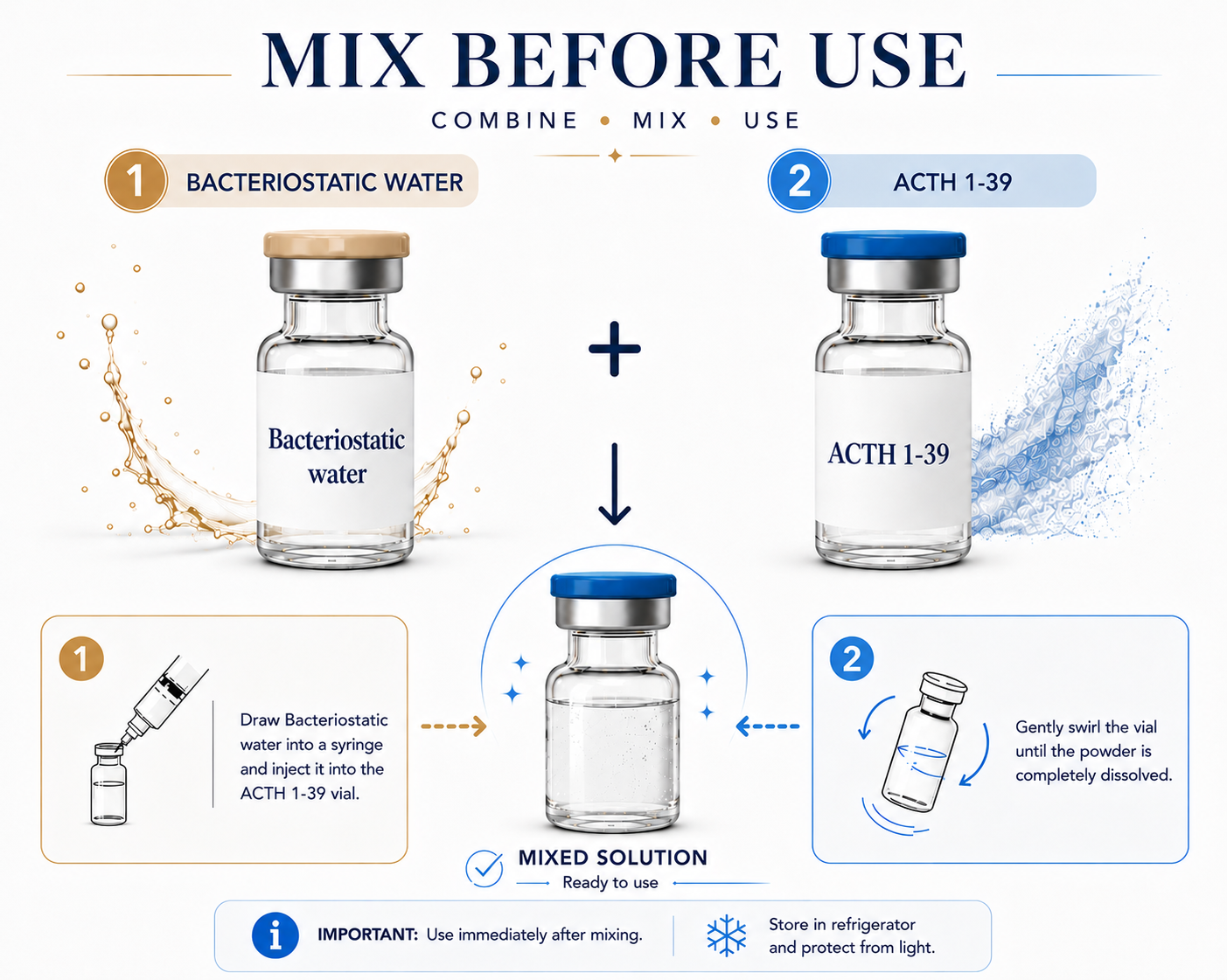
How To Mix ACTH 1-39
Use alcohol swabs to clean the tops of both vials.
Draw the selected amount of bacteriostatic water.
Add the liquid slowly down the side of the vial.
Do not shake. Swirl gently until dissolved.
Store as directed and protect from heat and light.
Best Practices & Common Mistakes
Best Practices
- Use sterile technique.
- Protect from light and heat.
- Store refrigerated when appropriate.
- Use clean syringe-unit math before measuring.
Common Mistakes
- Confusing milligrams with milliliters.
- Choosing an option with awkward decimal units.
- Using too little liquid for very small measurements.
- Shaking the vial aggressively.
ACTH 1-39 Storage & Handling
Reconstituted Solution: 2–8°C (36–46°F), use within ~7–14 days. Keep sealed, avoid light, and do not repeat freeze-thaw cycles.