
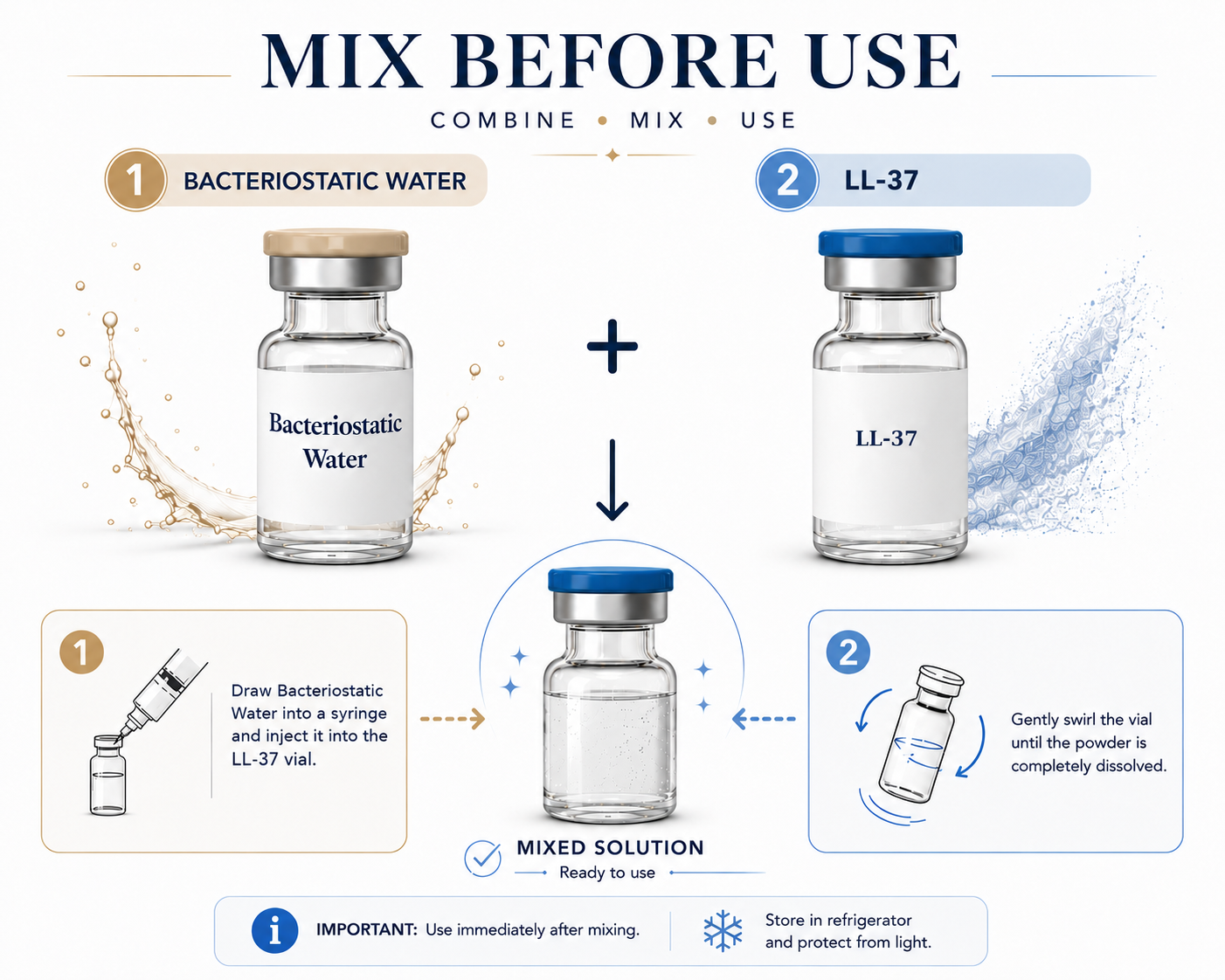
LL-37 (CAP-18) and BAC Water Mix

LL-37 (CAP-18) Reconstitution Calculator

Enter the amount you want to measure. The vial buttons will highlight which vial strengths create cleaner syringe-unit measurements.

What amount do you need?

Type the target amount, then choose mg or mcg. Example: 2mg or 500mcg.

Syringe size:
Possible vial strengths:
Best Match Good Match Usable Harder to Measure

Example LL-37 (CAP-18) Titration Schedule

Protocol ItemGuidance
Dose100–500 mcg per dose
CyclingDaily for 30 days; may be extended to 60 or 90 days with a 30-day minimum cycle break between cycles
How to AdjustCycle length and intensity depend on response and goal
Possible vial strengths:

What Is It?

LL-37 (CAP-18)

Cathelicidin antimicrobial peptide.

Bacteriostatic Water

Sterile water containing a bacteriostatic preservative, commonly used when preparing multi-use research vials.

How To Mix LL-37 (CAP-18)

1
Clean

Use alcohol swabs to clean the tops of both vials.

2
Draw BAC Water

Draw the selected amount of bacteriostatic water.

3
Inject Slowly

Add the liquid slowly down the side of the vial.

4
Swirl Gently

Do not shake. Swirl gently until dissolved.

5
Store Properly

Store as directed and protect from heat and light.

Best Practices & Common Mistakes

Best Practices

  • Use sterile technique.
  • Protect from light and heat.
  • Store refrigerated when appropriate.
  • Use clean syringe-unit math before measuring.

Common Mistakes

  • Confusing milligrams with milliliters.
  • Choosing an option with awkward decimal units.
  • Using too little liquid for very small measurements.
  • Shaking the vial aggressively.

LL-37 (CAP-18) Storage & Handling

Lyophilized Powder: −20°C (−4°F) for long-term storage (up to 24 months). Refrigeration 2–8°C (36–46°F) for short-term use (up to ~3 months). Original sealed vial in the freezer is safest.
Reconstituted Solution: 2–8°C (36–46°F), use within ~7–14 days. Keep sealed, avoid light, and do not repeat freeze-thaw cycles.

Frequently Asked Questions

LL-37 is the only human cathelicidin — a 37-amino-acid antimicrobial peptide your immune cells make as a first-line defense, cut from a precursor protein called hCAP-18. Unlike the muscle or healing peptides, it's an innate-immunity molecule studied for killing bacteria, fungi, and viruses and breaking up biofilms.
In research and anecdotal protocols it's referenced in micrograms — often somewhere around 100 mcg per day subcutaneously, in short courses. These are reference figures, not an approved regimen, and the right dose is a clinical decision.
Add bacteriostatic water and swirl gently — don't shake. A 5 mg vial + 2.5 mL gives 2 mg/mL (2,000 mcg/mL), so a 100 mcg dose = 0.05 mL = 5 units on a U-100 syringe. Use the calculator above for your exact vial size.
LL-37 is genuinely broad-acting against bacteria, fungi like Candida, and some viruses, largely by punching holes in microbial membranes. But it has a real double edge: it's both anti- and pro-inflammatory, and too much of it is implicated in rosacea, where excess LL-37 drives the redness and visible vessels. So the same molecule that defends can also inflame, depending on context and amount.
Despite its "natural antibiotic" reputation, LL-37 is cytotoxic to human cells at higher concentrations and can tip from calming to inflammatory, which is one reason its clinical use has been hard to develop. It is not FDA-approved and remains an investigational research compound. Store the dry vial refrigerated and out of light; once mixed, keep cold and use within a few weeks.
Practical takeaway: If your real goal is weight or metabolic health, the most useful next step is discussing approved treatment options with a clinician rather than relying on an unapproved compound.
Important: This tool is for informational and research-reference purposes only. Not intended for human or veterinary use.
← All peptides