
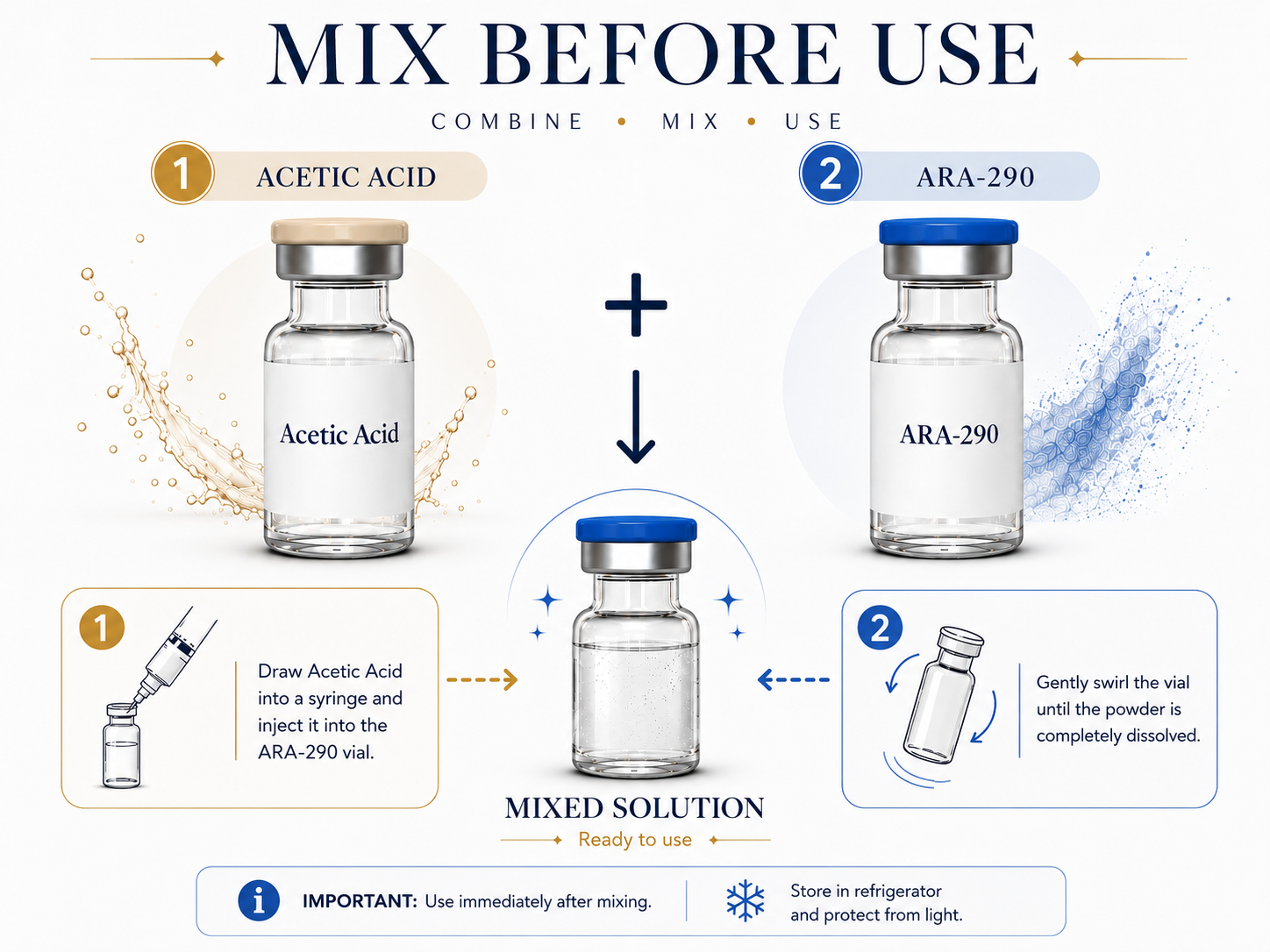
ARA-290 and Acetic Acid Mix

ARA-290 Reconstitution Calculator

Enter the amount you want to measure. The vial buttons will highlight which vial strengths create cleaner syringe-unit measurements.

⚠ Use acetic acid — not bacteriostatic water ARA-290 is insoluble or unstable in standard BAC water. Manufacturer protocols require reconstitution in dilute acetic acid (0.1%) — or, for IGF-1 variants, 50 mM acetic acid. Volumes shown below refer to acetic acid, not water.

What amount do you need?

Type the target amount, then choose mg or mcg. Example: 2mg or 500mcg.

Syringe size:
Possible vial strengths:
Best Match Good Match Usable Harder to Measure

Example ARA-290 Titration Schedule

Protocol ItemGuidance
Dose4–8 mg per dose
CyclingDaily for 30-day cycles (or shorter), with a 30-day minimum break between cycles
Possible vial strengths:

What Is It?

ARA-290

Erythropoietin-derived peptide investigated for neuropathy.

Acetic Acid (0.1%)

A dilute solution of acetic acid (typically 0.1% for most peptides, or 50 mM for IGF-1 variants) used to reconstitute peptides that are insoluble or unstable in standard bacteriostatic water. ARA-290 requires an acidic carrier to dissolve fully and remain stable — plain BAC water will not work and may damage the peptide.

How To Mix ARA-290

1
Clean

Use alcohol swabs to clean the tops of both vials.

2
Draw Acetic Acid

Draw the selected amount of 0.1% acetic acid.

3
Inject Slowly

Add the liquid slowly down the side of the vial.

4
Swirl Gently

Do not shake. Swirl gently until dissolved.

5
Store Properly

Store as directed and protect from heat and light.

Best Practices & Common Mistakes

Best Practices

  • Use sterile technique.
  • Protect from light and heat.
  • Store refrigerated when appropriate.
  • Use clean syringe-unit math before measuring.

Common Mistakes

  • Confusing milligrams with milliliters.
  • Choosing an option with awkward decimal units.
  • Using too little liquid for very small measurements.
  • Shaking the vial aggressively.

ARA-290 Storage & Handling

Lyophilized Powder: −20°C (−4°F) for long-term storage (up to 24 months). Refrigeration 2–8°C (36–46°F) for short-term use (up to ~3 months). Original sealed vial in the freezer is safest.
Reconstituted Solution: 2–8°C (36–46°F), use within ~7–14 days. Keep sealed, avoid light, and do not repeat freeze-thaw cycles.

Frequently Asked Questions

ARA-290 is an 11-amino-acid peptide cut from the tissue-protective part of erythropoietin (EPO). Unlike EPO, it doesn't raise red blood cells at all — it triggers only EPO's separate repair-and-anti-inflammatory pathway, so it sidesteps EPO's clotting and cardiovascular risks. It's studied mainly for nerve repair and neuropathic pain.
In published Phase 2 trials, ARA-290 was given at about 2–4 mg per day by subcutaneous injection. These are research figures from trial designs, not an approved regimen, and dosing is a clinical decision.
Add bacteriostatic water and swirl gently — don't shake. A 10 mg vial + 2 mL gives 5 mg/mL, so a 4 mg dose = 0.8 mL = 80 units on a U-100 syringe. Use the calculator above for your exact vial size (10 mg and 16 mg are common).
Its target, the innate repair receptor, appears at sites of injury and inflammation, and ARA-290 switches it on to calm inflammation and support small-fiber nerve repair rather than just numbing pain. Phase 2 trials in sarcoidosis- and diabetes-related small-fiber neuropathy reported less neuropathic pain and increased corneal nerve-fiber density — real human signals, which is unusual among research peptides. It even holds FDA orphan-drug status for sarcoidosis neuropathy.
ARA-290 has a favorable safety profile in the trials run so far, helped by the fact that it doesn't affect red blood cells — but those trials are small (around 100 patients total), so rare risks and long-term effects aren't known. Despite genuine Phase 2 data and orphan-drug status, it was never approved, the developer closed, and development stalled — promising signals, no finish line. Store the dry vial refrigerated and out of light; once mixed, keep cold and use within a few weeks.
Practical takeaway: If your real goal is weight or metabolic health, the most useful next step is discussing approved treatment options with a clinician rather than relying on an unapproved compound.
Important: This tool is for informational and research-reference purposes only. Not intended for human or veterinary use.
← All peptides