
Danuglipron Reconstitution Calculator
Enter the amount you want to measure. The vial buttons will highlight which vial strengths create cleaner syringe-unit measurements.
What amount do you need?
Type the target amount, then choose mg or mcg. Example: 2mg or 500mcg.
Work the dose out from body weight
Syringe size:
Possible vial strengths:
Best Match
Good Match
Usable
Harder to Measure
Example Danuglipron Titration Schedule
| Parameter | Details |
|---|---|
| Phase 2b doses | 40–200 mg oral twice daily |
| Cycle | 12–32 weeks (trials) |
Discontinued April 2025: one case of potential drug-induced liver injury (resolved on discontinuation). Historical data only — no supply exists.
Possible vial strengths:
What Is It?
Danuglipron
Oral small-molecule GLP-1 receptor agonist.
Bacteriostatic Water
Sterile water containing a bacteriostatic preservative, commonly used when preparing multi-use research vials.
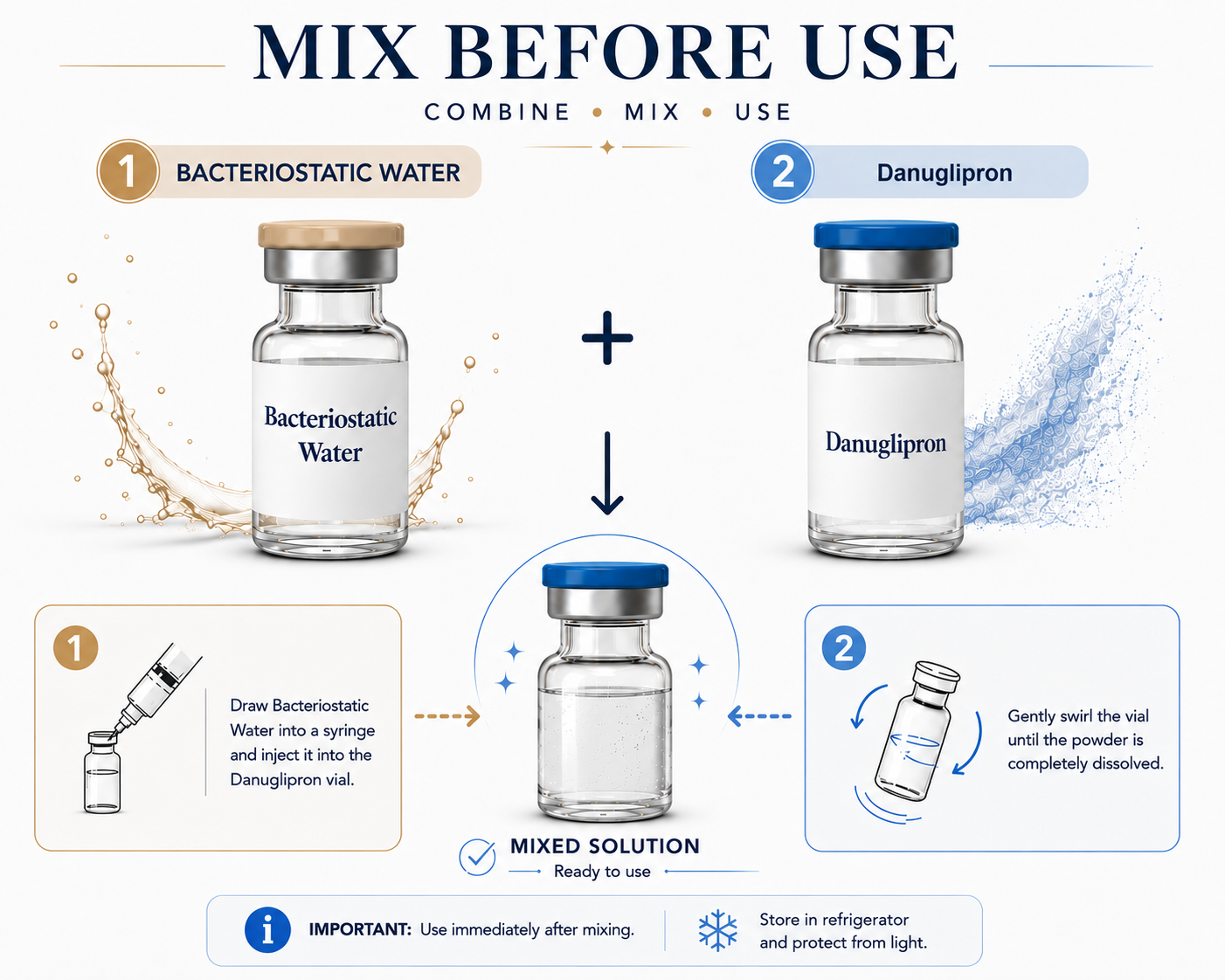
How To Mix Danuglipron
1
CleanUse alcohol swabs to clean the tops of both vials.
2
Draw BAC WaterDraw the selected amount of bacteriostatic water.
3
Inject SlowlyAdd the liquid slowly down the side of the vial.
4
Swirl GentlyDo not shake. Swirl gently until dissolved.
5
Store ProperlyStore as directed and protect from heat and light.
Best Practices & Common Mistakes
Best Practices
- Use sterile technique.
- Protect from light and heat.
- Store refrigerated when appropriate.
- Use clean syringe-unit math before measuring.
Common Mistakes
- Confusing milligrams with milliliters.
- Choosing an option with awkward decimal units.
- Using too little liquid for very small measurements.
- Shaking the vial aggressively.
Danuglipron Storage & Handling
Lyophilized Powder: −20°C (−4°F) for long-term storage (up to 24 months). Refrigeration 2–8°C (36–46°F) for short-term use (up to ~3 months). Original sealed vial in the freezer is safest.
Reconstituted Solution: 2–8°C (36–46°F), use within ~7–14 days. Keep sealed, avoid light, and do not repeat freeze-thaw cycles.
Reconstituted Solution: 2–8°C (36–46°F), use within ~7–14 days. Keep sealed, avoid light, and do not repeat freeze-thaw cycles.
Frequently Asked Questions
“Anuglipron” is most likely a misspelling of danuglipron, Pfizer’s investigational oral GLP-1 receptor agonist. It was studied as a small-molecule obesity and diabetes drug candidate, not as a peptide vial intended for bacteriostatic-water reconstitution.
Danuglipron is not a peptide; it is a synthetic small molecule with a listed molecular weight of about 555.6 g/mol. If a calculator page includes danuglipron, it should frame the math as research concentration calculation only, not as a peptide injection or human-use protocol.
Pfizer discontinued danuglipron development in 2025 after a potential drug-induced liver injury signal appeared in one study participant during dose optimization. The participant had no symptoms, liver enzymes returned to normal after stopping the compound, and Pfizer said it would not continue the program.
Earlier Phase 2b data showed weight-loss signals, but tolerability was a major limitation. Pfizer reported dose-related gastrointestinal side effects such as nausea, vomiting, and diarrhea, and the twice-daily version did not move forward into Phase 3.
For research math only, concentration is calculated by dividing compound amount by final liquid volume. For example, if 25 mg of danuglipron reference material were dissolved to a final volume of 8 mL, the concentration would be 3.125 mg/mL, so a 5 mg research amount would equal 1.60 mL; this is not an injection guide or dosing recommendation.
Practical takeaway: If your goal involves weight management, metabolic health, recovery, physical performance, cognitive function, appearance, or general well-being, discuss it with a licensed healthcare professional. They can help you evaluate approved, evidence-based options rather than relying on an unapproved or investigational compound. This calculator is intended only for transparent research-reference calculations and does not determine an appropriate amount, recommend use, or replace professional medical guidance.
Important: This tool is for informational and research-reference purposes only. Not intended for human or veterinary use.