
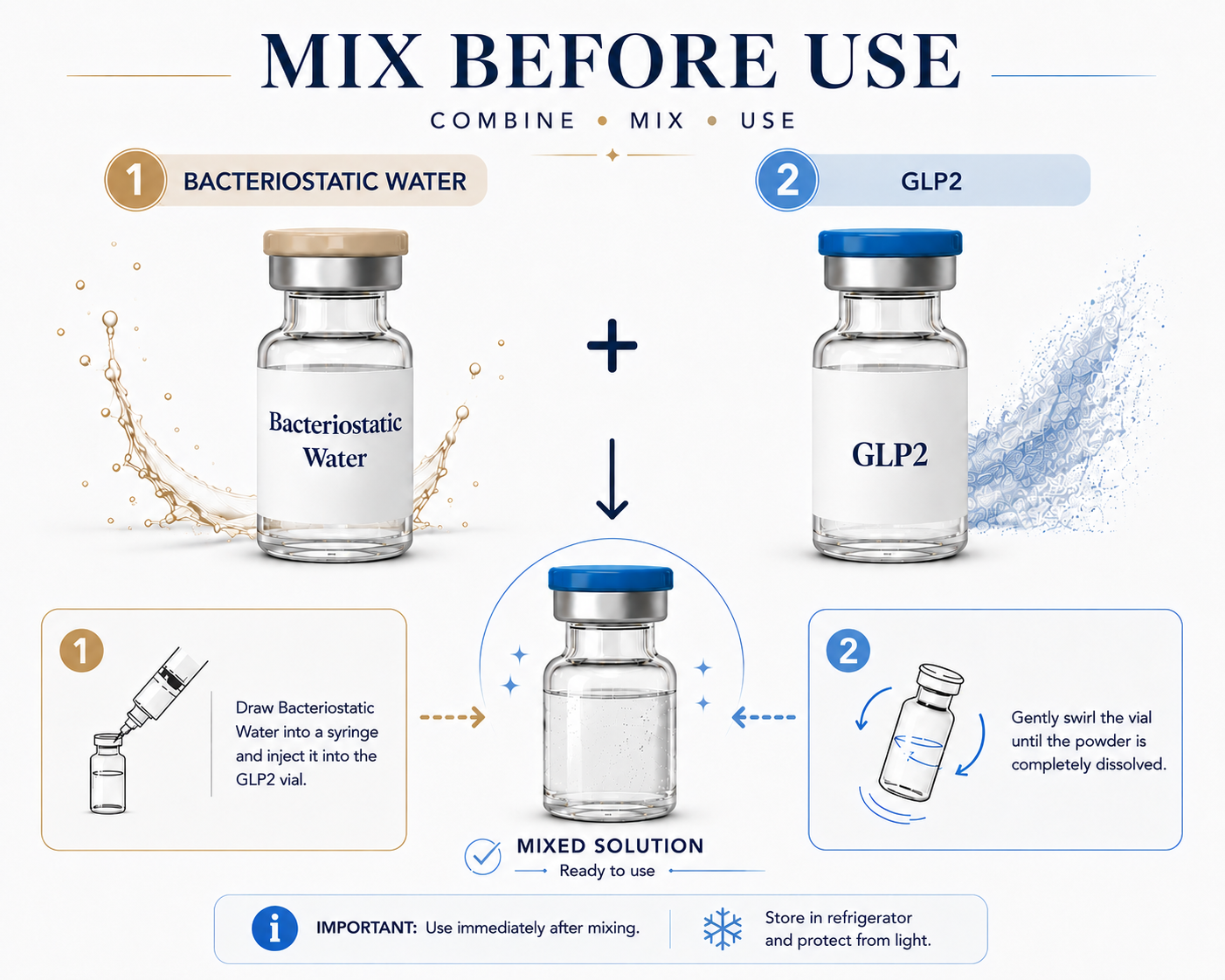
GLP2 and BAC Water Mix

GLP2 Reconstitution Calculator

Enter the amount you want to measure. The vial buttons will highlight which vial strengths create cleaner syringe-unit measurements.

What amount do you need?

Type the target amount, then choose mg or mcg. Example: 2mg or 500mcg.

Syringe size:
Possible vial strengths:
Best Match Good Match Usable Harder to Measure

Example GLP2 Titration Schedule

Protocol ItemGuidance (As Listed)
Dose1–5 mg per dose
Frequency1× weekly
Cycle3-month cycles, with a minimum 1 month off
ExtensionCycles may be extended depending on response and goal
Possible vial strengths:

What Is It?

GLP2

GLP-2 analogue studied for intestinal repair.

Bacteriostatic Water

Sterile water containing a bacteriostatic preservative, commonly used when preparing multi-use research vials.

How To Mix GLP2

1
Clean

Use alcohol swabs to clean the tops of both vials.

2
Draw BAC Water

Draw the selected amount of bacteriostatic water.

3
Inject Slowly

Add the liquid slowly down the side of the vial.

4
Swirl Gently

Do not shake. Swirl gently until dissolved.

5
Store Properly

Store as directed and protect from heat and light.

Best Practices & Common Mistakes

Best Practices

  • Use sterile technique.
  • Protect from light and heat.
  • Store refrigerated when appropriate.
  • Use clean syringe-unit math before measuring.

Common Mistakes

  • Confusing milligrams with milliliters.
  • Choosing an option with awkward decimal units.
  • Using too little liquid for very small measurements.
  • Shaking the vial aggressively.

GLP2 Storage & Handling

Lyophilized Powder: −20°C (−4°F) for long-term storage (up to 24 months). Refrigeration 2–8°C (36–46°F) for short-term use (up to ~3 months). Original sealed vial in the freezer is safest.
Reconstituted Solution: 2–8°C (36–46°F), use within ~7–14 days. Keep sealed, avoid light, and do not repeat freeze-thaw cycles.

Frequently Asked Questions

GLP-2 is a gut hormone, separate from GLP-1. Its approved drug is teduglutide (Gattex/Revestive), used for short bowel syndrome — a condition where the intestine can't absorb enough nutrients. It is not a weight-loss compound.
No — and this is a common mix-up. GLP-2 (teduglutide) actually increases nutrient absorption in the gut, the opposite of what a weight-loss drug does. The weight and diabetes drugs people are thinking of are all GLP-1 based: semaglutide, tirzepatide, retatrutide.
Both come from the same parent molecule but do different jobs. GLP-1 lowers blood sugar and appetite — the basis of today's weight-loss drugs. GLP-2 promotes growth and absorption in the intestinal lining, which is why its drug treats short bowel syndrome, not obesity.
Yes, effectively. "GLP-2TZ" (also GLP-2T or GLP2-T) isn't an official name — it's an informal label some sellers use for tirzepatide, the GLP-1/GIP dual agonist sold as Mounjaro and Zepbound. It has nothing to do with the GLP-2 hormone. Check the Certificate of Analysis to confirm the actual compound.
No. Tirzepatide acts on GLP-1 and GIP receptors — there's no GLP-2 involved, despite the "GLP-2TZ" nickname. While clearing this up: "GLP-3" isn't a real class either — it's an informal term for retatrutide, the triple GLP-1/GIP/glucagon agonist. Only GLP-1-based drugs are the weight-loss compounds.
Practical takeaway: If your real goal is weight or metabolic health, the most useful next step is discussing approved treatment options with a clinician rather than relying on an unapproved compound.
Important: This tool is for informational and research-reference purposes only. Not intended for human or veterinary use.
← All peptides