Need a Reliable Peptide Supplier? Click HERE!!!SponsoredVisit ↗
hGH Fragment 176-191 and BAC Water Mix

hGH Fragment 176-191 Reconstitution Calculator

Enter the amount you want to measure. The vial buttons will highlight which vial strengths create cleaner syringe-unit measurements.

What amount do you need?

Type the target amount, then choose mg or mcg. Example: 2mg or 500mcg.

Work the dose out from body weight

Syringe size:
Possible vial strengths:
Best Match Good Match Usable Harder to Measure

Example hGH Fragment 176-191 Titration Schedule

ItemDetails
Standard dose250–500 mcg per injection
Frequency1–2× per day, fasted
Total daily500–1,000 mcg
Cycle4–12 weeks + 1–4 weeks off

No human clinical trial of this fragment has ever been published; dosing derives from rodent studies and community reports. Doses above 1 mg/day have no data behind them.

Possible vial strengths:

What Is It?

hGH Fragment 176-191

C-terminal fragment of human growth hormone.

Bacteriostatic Water

Sterile water containing a bacteriostatic preservative, commonly used when preparing multi-use research vials.

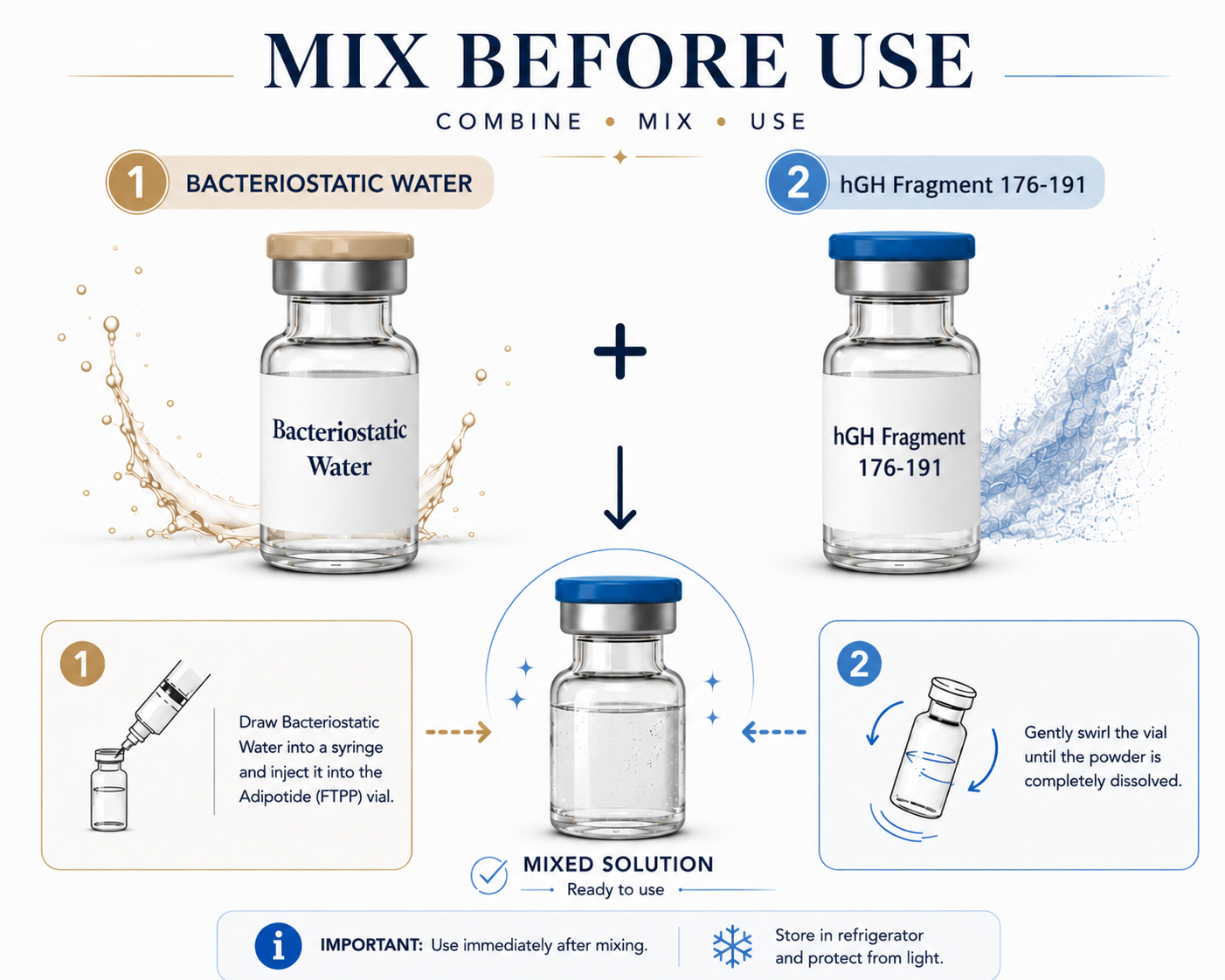
How To Mix hGH Fragment 176-191

1
Clean

Use alcohol swabs to clean the tops of both vials.

2
Draw BAC Water

Draw the selected amount of bacteriostatic water.

3
Inject Slowly

Add the liquid slowly down the side of the vial.

4
Swirl Gently

Do not shake. Swirl gently until dissolved.

5
Store Properly

Store as directed and protect from heat and light.

Best Practices & Common Mistakes

Best Practices

  • Use sterile technique.
  • Protect from light and heat.
  • Store refrigerated when appropriate.
  • Use clean syringe-unit math before measuring.

Common Mistakes

  • Confusing milligrams with milliliters.
  • Choosing an option with awkward decimal units.
  • Using too little liquid for very small measurements.
  • Shaking the vial aggressively.

hGH Fragment 176-191 Storage & Handling

Lyophilized Powder: −20°C (−4°F) for long-term storage (up to 24 months). Refrigeration 2–8°C (36–46°F) for short-term use (up to ~3 months). Original sealed vial in the freezer is safest.
Reconstituted Solution: 2–8°C (36–46°F), use within ~7–14 days. Keep sealed, avoid light, and do not repeat freeze-thaw cycles.

Frequently Asked Questions

It's a small piece of the growth hormone molecule — specifically amino acids 176 to 191, the tail end of human growth hormone. This fragment was isolated to try to capture the fat-metabolism effect of growth hormone without its other actions. It is not growth hormone itself, and it isn't an approved medicine.
No to both. Full HGH (191aa) is the complete growth hormone and affects growth, blood sugar and many tissues. The 176-191 fragment is only the tail portion, intended to act mainly on fat metabolism without the full hormone's broader effects. And it's a peptide, not a steroid — a completely different class from anabolic steroids.
Add bacteriostatic water slowly down the side of the vial and swirl gently until clear — never shake. The water volume sets the concentration: a 5 mg vial with 1 mL gives 5 mg/mL, so a 250 mcg measurement is 0.05 mL (5 units on a 1 mL insulin syringe). Since doses are small, a lower concentration makes them easier to measure — the calculator highlights the cleanest unit matches.
In research it's used daily, often split into small subcutaneous doses and frequently taken on an empty stomach, since eating raises insulin and is thought to blunt the fat-metabolism effect. Because it's daily rather than weekly, a vial empties quickly — plan accordingly. These are research patterns shown for reference, not a recommendation; there's no approved human dose.
Its legal status varies by country and it's not an approved drug, so quality of research-grade material isn't guaranteed. On effectiveness: like the closely related AOD-9604, human evidence for meaningful weight loss is weak — early enthusiasm runs ahead of the clinical data. The calculator handles the measurement, but it can't make the underlying effect stronger than studies show.
Practical takeaway: If your goal involves weight management, metabolic health, recovery, physical performance, cognitive function, appearance, or general well-being, discuss it with a licensed healthcare professional. They can help you evaluate approved, evidence-based options rather than relying on an unapproved or investigational compound. This calculator is intended only for transparent research-reference calculations and does not determine an appropriate amount, recommend use, or replace professional medical guidance.

About the author

Maria Hrabina is a pharmacist and scientific reviewer with a strong interest in peptide science, pharmacology, and emerging therapeutic compounds.

Her work focuses on understanding how peptide-based compounds interact with biological signaling pathways and how they are being investigated across areas such as metabolic health, dermatology, recovery, regenerative research, and pharmaceutical development.

Maria follows research on a broad range of peptides, from compounds used in approved medicines to experimental molecules still being evaluated in laboratory, preclinical, and clinical studies.

Her approach combines scientific curiosity with critical evaluation of evidence. She believes promising mechanisms and early research deserve attention, but should not be presented as established clinical benefits until they are supported by adequate human data.

Her areas of focus include scientific literature review, mechanisms of action, pharmacology, pharmacokinetics, safety, pharmaceutical formulation, and the overall quality of evidence behind peptide-based compounds.

She is particularly interested in the process of translating an experimental molecule into a reliable pharmaceutical product — including compound characterization, purity, stability, formulation, dose selection, safety assessment, and controlled clinical trials.

Maria believes peptide science has significant long-term potential, but that its progress depends on rigorous research, high manufacturing standards, transparent safety data, and responsible scientific communication.

Through her writing, she aims to help readers understand both sides of peptide research: what makes these compounds scientifically promising and what questions remain before their potential can be considered clinically established.

Areas of interest: Peptide Science · Therapeutic Peptides · Peptide Pharmacology · Metabolic Peptides · Cosmetic Peptides · Drug Development · Pharmacokinetics · Drug Safety · Pharmaceutical Formulation · Emerging Therapies · Evidence-Based Medicine

Important: This tool is for informational and research-reference purposes only. Not intended for human or veterinary use.
← All peptides