
Kisspeptin-10 Reconstitution Calculator
Enter the amount you want to measure. The vial buttons will highlight which vial strengths create cleaner syringe-unit measurements.
What amount do you need?
Type the target amount, then choose mg or mcg. Example: 2mg or 500mcg.
Syringe size:
Possible vial strengths:
Best Match
Good Match
Usable
Harder to Measure
Example Kisspeptin-10 Titration Schedule
| Protocol Item | Guidance |
|---|---|
| Dose | 100–500 mcg per dose |
| Frequency | 2–3× per week, over several months |
| Cycle Break | Minimum 1 month off between cycles |
| Timing Note | Described as best taken when LH/FSH naturally peak—typically in the morning |
| Female Cycle Note | Typically cycled around conception; for females, particularly during the follicular phase leading up to ovulation, then discontinued after |
Possible vial strengths:
What Is It?
Kisspeptin-10
Kisspeptin fragment studied in reproductive signaling.
Bacteriostatic Water
Sterile water containing a bacteriostatic preservative, commonly used when preparing multi-use research vials.
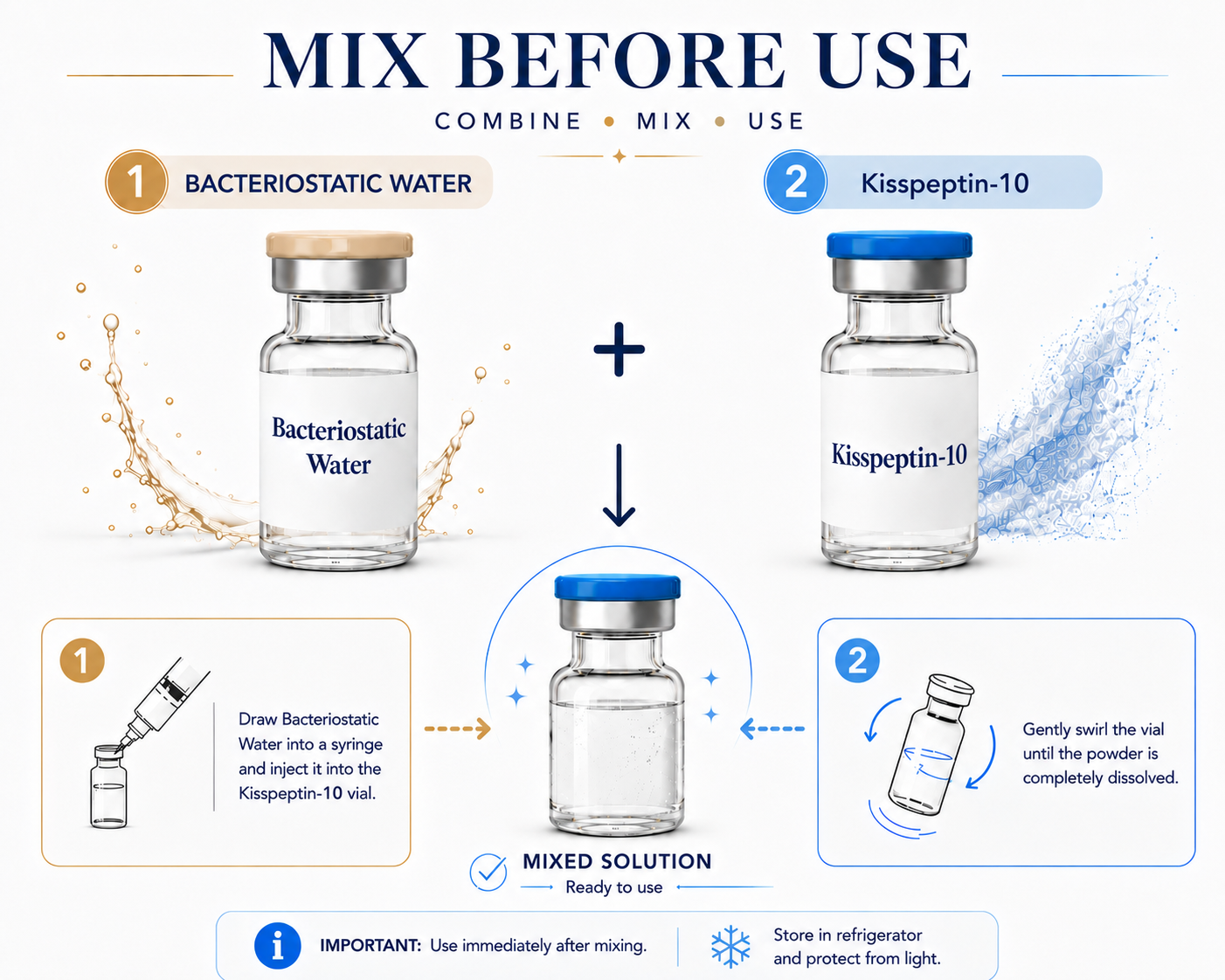
How To Mix Kisspeptin-10
1
CleanUse alcohol swabs to clean the tops of both vials.
2
Draw BAC WaterDraw the selected amount of bacteriostatic water.
3
Inject SlowlyAdd the liquid slowly down the side of the vial.
4
Swirl GentlyDo not shake. Swirl gently until dissolved.
5
Store ProperlyStore as directed and protect from heat and light.
Best Practices & Common Mistakes
Best Practices
- Use sterile technique.
- Protect from light and heat.
- Store refrigerated when appropriate.
- Use clean syringe-unit math before measuring.
Common Mistakes
- Confusing milligrams with milliliters.
- Choosing an option with awkward decimal units.
- Using too little liquid for very small measurements.
- Shaking the vial aggressively.
Kisspeptin-10 Storage & Handling
Lyophilized Powder: −20°C (−4°F) for long-term storage (up to 24 months). Refrigeration 2–8°C (36–46°F) for short-term use (up to ~3 months). Original sealed vial in the freezer is safest.
Reconstituted Solution: 2–8°C (36–46°F), use within ~7–14 days. Keep sealed, avoid light, and do not repeat freeze-thaw cycles.
Frequently Asked Questions
Kisspeptin-10 is a 10-amino-acid neuropeptide (the active C-terminal fragment of kisspeptin-54, encoded by the KISS1 gene) that sits at the very top of the reproductive hormone cascade. It binds the KISS1R (GPR54) receptor on GnRH neurons in the hypothalamus — it's the switch that tells those neurons to fire, initiating the whole chain that drives puberty, fertility, and sexual function. It is an investigational research peptide, not an approved drug.
It can raise testosterone, but indirectly and briefly: kisspeptin-10 switches on hypothalamic GnRH neurons, which release GnRH in its natural pulsatile pattern, prompting the pituitary to put out LH and FSH, which then drive the gonads. Because it's the most potent known trigger of GnRH neurons, even small amounts spark an LH surge. But its plasma half-life is only about 4 minutes, so its effect is short-lived and continuous high-dose exposure can blunt the receptor rather than help.
The three act at three different levels of the same chain. Kisspeptin-10 is highest up — it stimulates the hypothalamus to release its own GnRH; gonadorelin is one step down — it is GnRH, acting directly on the pituitary; and hCG is lowest — it mimics LH at the gonads, skipping the brain entirely. So kisspeptin is the most "upstream" and physiological trigger, while hCG is the most direct. They are not the same and aren't interchangeable.
Its most distinctive research area is sexual function: Imperial College studies found kisspeptin increased activity in brain regions tied to sexual arousal and improved subjective "happiness about sex," including in people with low desire — a brain-and-hormone effect that sets it apart from pure axis drugs. It's also studied as an IVF ovulation trigger (potentially with less risk of ovarian hyperstimulation), and in hypothalamic amenorrhea and menopausal hot flashes. All of this is early-stage (Phase 1/2) human research, not established treatment.
Reconstitute the lyophilized powder with bacteriostatic water: for a 5 mg vial, adding 4 mL gives 1.25 mg/mL, so a 250 mcg amount draws to 0.2 mL (20 units on a U-100 syringe); adjust the water volume to suit your dosing. It is not FDA-approved — only investigational and sold as a research compound — with limited human safety data and no established long-term profile, so fertility, testosterone, or libido concerns belong with a clinician. Storage: keep the dry powder cold and dark, and refrigerate reconstituted solution, using it within a few weeks.
Practical takeaway: If your real goal is weight or metabolic health, the most useful next step is discussing approved treatment options with a clinician rather than relying on an unapproved compound.
Important: This tool is for informational and research-reference purposes only. Not intended for human or veterinary use.