
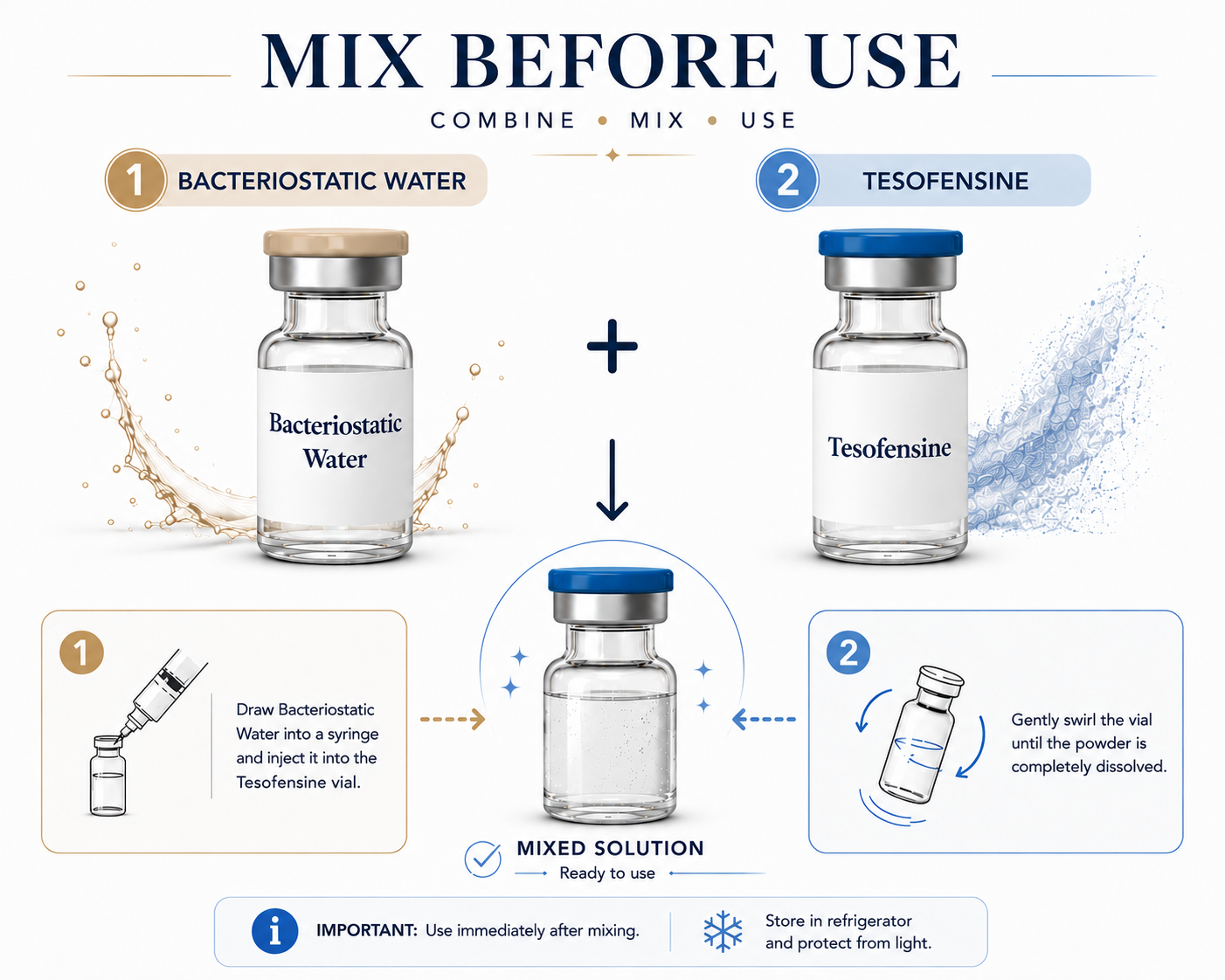
Tesofensine and BAC Water Mix

Tesofensine Reconstitution Calculator

Enter the amount you want to measure. The vial buttons will highlight which vial strengths create cleaner syringe-unit measurements.

What amount do you need?

Type the target amount, then choose mg or mcg. Example: 2mg or 500mcg.

Syringe size:
Possible vial strengths:
Best Match Good Match Usable Harder to Measure

Example Tesofensine Titration Schedule

ParameterDetails
Dosage0.125–1.0 mg/day (common: 0.25–0.5 mg/day). Titration: 0.125/0.25 mg → up to 1 mg max
RouteOral (capsule)
FrequencyOnce daily
Cycle Length14–48 weeks (clinical trials)
Half‑life~9 days (~220 h)
ReconstitutionNot applicable (oral)
Possible vial strengths: 500mcg

What Is It?

Tesofensine

Monoamine reuptake inhibitor studied for weight research.

Bacteriostatic Water

Sterile water containing a bacteriostatic preservative, commonly used when preparing multi-use research vials.

How To Mix Tesofensine

1
Clean

Use alcohol swabs to clean the tops of both vials.

2
Draw BAC Water

Draw the selected amount of bacteriostatic water.

3
Inject Slowly

Add the liquid slowly down the side of the vial.

4
Swirl Gently

Do not shake. Swirl gently until dissolved.

5
Store Properly

Store as directed and protect from heat and light.

Best Practices & Common Mistakes

Best Practices

  • Use sterile technique.
  • Protect from light and heat.
  • Store refrigerated when appropriate.
  • Use clean syringe-unit math before measuring.

Common Mistakes

  • Confusing milligrams with milliliters.
  • Choosing an option with awkward decimal units.
  • Using too little liquid for very small measurements.
  • Shaking the vial aggressively.

Tesofensine Storage & Handling

Lyophilized Powder: −20°C (−4°F) for long-term storage (up to 24 months). Refrigeration 2–8°C (36–46°F) for short-term use (up to ~3 months). Original sealed vial in the freezer is safest.
Reconstituted Solution: 2–8°C (36–46°F), use within ~7–14 days. Keep sealed, avoid light, and do not repeat freeze-thaw cycles.

Frequently Asked Questions

Tesofensine is often listed near peptides because people compare it with weight-loss research compounds, but chemically it is not a peptide. It is a small-molecule serotonin, norepinephrine, and dopamine reuptake inhibitor, so a reconstitution calculator should not treat it like a lyophilized injectable peptide.
Tesofensine acts mainly through central monoamine signaling, while semaglutide and tirzepatide act through incretin hormone receptors. That makes tesofensine more similar to a CNS appetite-modulating compound than to a GLP-1 peptide or dual incretin injection.
Searches for 500 mcg usually reflect how tesofensine is discussed in capsules, tablets, or research listings, not a universal instruction. A calculator page can explain unit conversion clearly: 500 mcg equals 0.5 mg, but that conversion alone does not tell anyone when, how, or whether to use it.
Because tesofensine affects dopamine, norepinephrine, and serotonin signaling, side-effect and withdrawal searches should be taken seriously. Common discussion points include insomnia, dry mouth, mood changes, heart-rate changes, and stimulant-like effects, so this topic should be framed as safety context rather than casual supplement talk.
For research math only, concentration equals compound amount divided by final solution volume. For example, if 5 mg of tesofensine reference material were dissolved to a final volume of 20 mL, the concentration would be 0.25 mg/mL; a 500 mcg research aliquot would equal 2.00 mL. This is lab concentration math, not a dosing, injection, or administration guide.
Practical takeaway: If your real goal is weight or metabolic health, the most useful next step is discussing approved treatment options with a clinician rather than relying on an unapproved compound.
Important: This tool is for informational and research-reference purposes only. Not intended for human or veterinary use.
← All peptides