
Thymosin Beta-4 Reconstitution Calculator
Enter the amount you want to measure. The vial buttons will highlight which vial strengths create cleaner syringe-unit measurements.
What amount do you need?
Type the target amount, then choose mg or mcg. Example: 2mg or 500mcg.
Work the dose out from body weight
Example Thymosin Beta-4 Titration Schedule
| Phase | Dose | Frequency |
|---|---|---|
| Loading | 2–2.5 mg | 2× per week ×4–6 wks |
| Maintenance | 2–2.5 mg | 1× per week ×4–8 wks |
| Rest | — | 4–12 weeks off |
Community protocol identical to the TB-500 fragment sheet. Human data for the full-length molecule are topical (RGN-259 eye drops) and IV only — no SC efficacy trials exist.
What Is It?
Thymosin Beta-4
Full-length thymosin β-4 peptide.
Acetic Acid (0.1%)
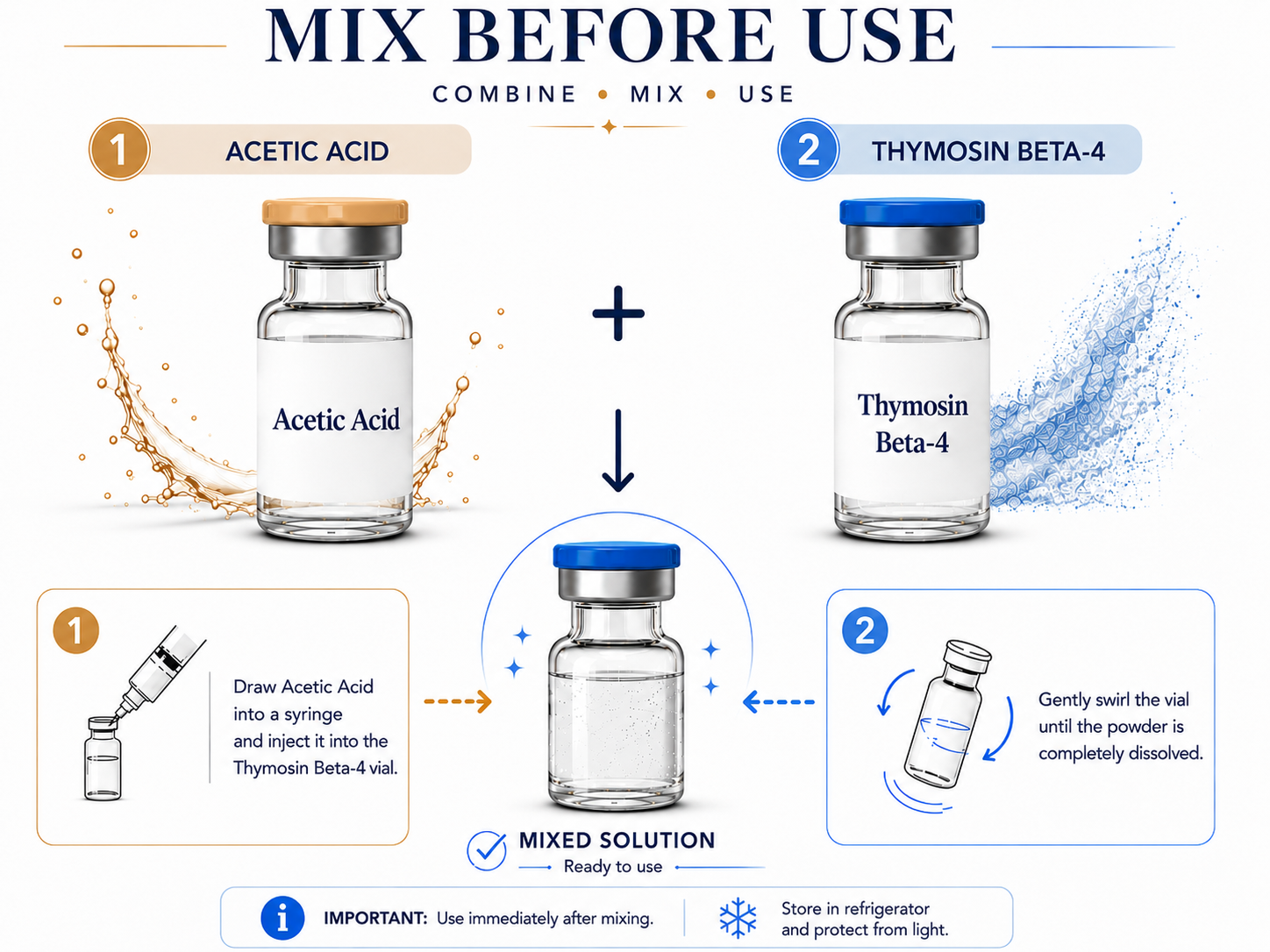
A dilute solution of acetic acid (typically 0.1% for most peptides, or 50 mM for IGF-1 variants) used to reconstitute peptides that are insoluble or unstable in standard bacteriostatic water. Thymosin Beta-4 requires an acidic carrier to dissolve fully and remain stable — plain BAC water will not work and may damage the peptide.
How To Mix Thymosin Beta-4
Use alcohol swabs to clean the tops of both vials.
Draw the selected amount of 0.1% acetic acid.
Add the liquid slowly down the side of the vial.
Do not shake. Swirl gently until dissolved.
Store as directed and protect from heat and light.
Best Practices & Common Mistakes
Best Practices
- Use sterile technique.
- Protect from light and heat.
- Store refrigerated when appropriate.
- Use clean syringe-unit math before measuring.
Common Mistakes
- Confusing milligrams with milliliters.
- Choosing an option with awkward decimal units.
- Using too little liquid for very small measurements.
- Shaking the vial aggressively.
Thymosin Beta-4 Storage & Handling
Reconstituted Solution: 2–8°C (36–46°F), use within ~7–14 days. Keep sealed, avoid light, and do not repeat freeze-thaw cycles.