CJC-1295 DAC and BAC Water Mix

CJC-1295 DAC Reconstitution Calculator

Enter the amount you want to measure. The vial buttons will highlight which vial strengths create cleaner syringe-unit measurements.

What amount do you need?

Type the target amount, then choose mg or mcg. Example: 2mg or 500mcg.

Syringe size:
Possible vial strengths:
Best Match Good Match Usable Harder to Measure

Example CJC-1295 DAC Titration Schedule

Protocol ItemGuidance
Dose Strategy A200–400 mcg daily
Dose Strategy B1–2 larger doses per week
Total Weekly Range~1–5 mg per week
Cycling6–8 weeks on, then 4–8 weeks off (minimum)
Possible vial strengths:

What Is It?

CJC-1295 DAC

Long-acting GHRH analogue with drug affinity complex.

Bacteriostatic Water

Sterile water containing a bacteriostatic preservative, commonly used when preparing multi-use research vials.

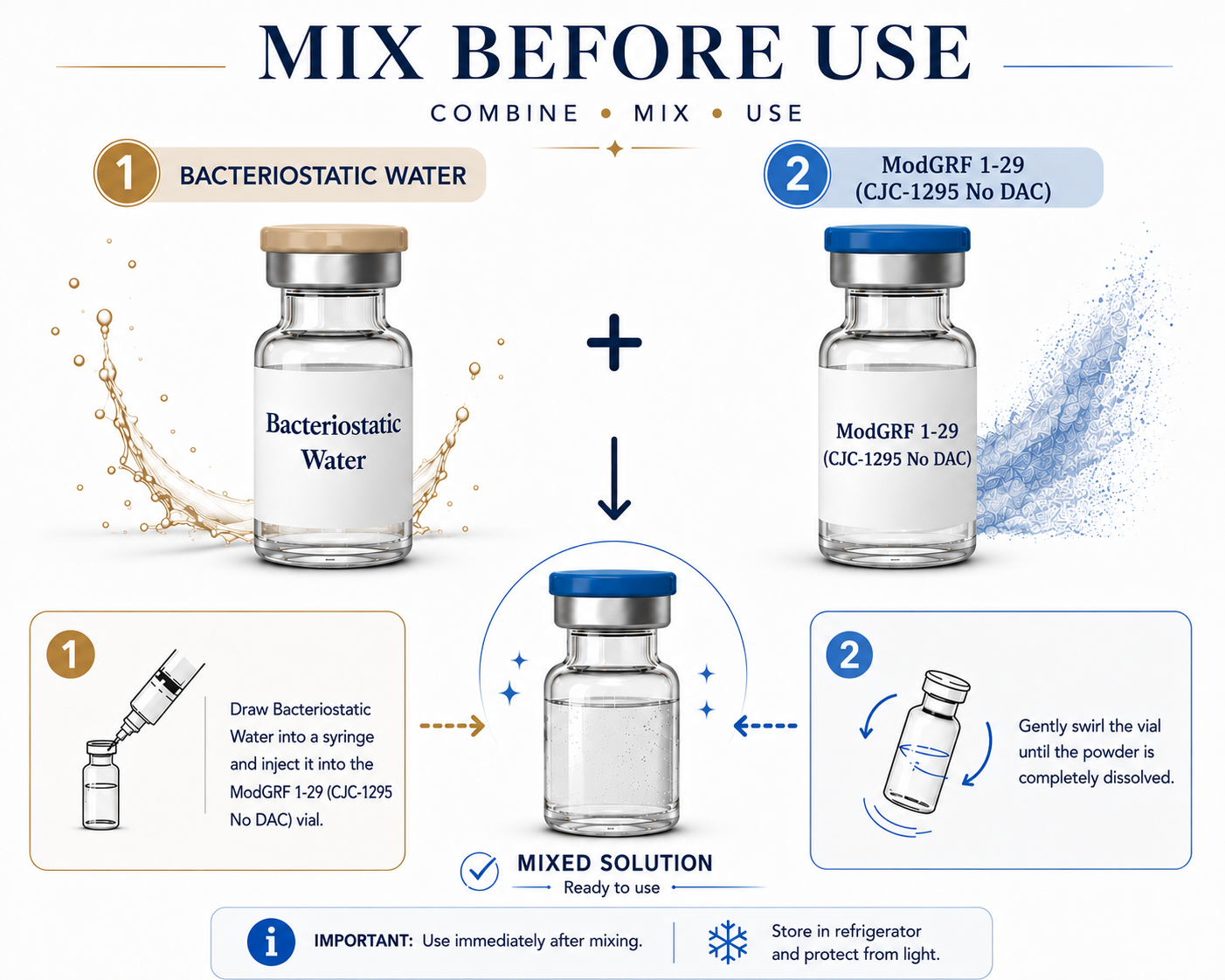
How To Mix CJC-1295 DAC

1
Clean

Use alcohol swabs to clean the tops of both vials.

2
Draw BAC Water

Draw the selected amount of bacteriostatic water.

3
Inject Slowly

Add the liquid slowly down the side of the vial.

4
Swirl Gently

Do not shake. Swirl gently until dissolved.

5
Store Properly

Store as directed and protect from heat and light.

Best Practices & Common Mistakes

Best Practices

  • Use sterile technique.
  • Protect from light and heat.
  • Store refrigerated when appropriate.
  • Use clean syringe-unit math before measuring.

Common Mistakes

  • Confusing milligrams with milliliters.
  • Choosing an option with awkward decimal units.
  • Using too little liquid for very small measurements.
  • Shaking the vial aggressively.

CJC-1295 DAC Storage & Handling

Lyophilized Powder: −20°C (−4°F) for long-term storage (up to 24 months). Refrigeration 2–8°C (36–46°F) for short-term use (up to ~3 months). Original sealed vial in the freezer is safest.
Reconstituted Solution: 2–8°C (36–46°F), use within ~7–14 days. Keep sealed, avoid light, and do not repeat freeze-thaw cycles.

Frequently Asked Questions

CJC-1295 is a GHRH analogue — it prompts your body to release more of its own growth hormone. The "DAC" (Drug Affinity Complex) is a modification that binds to blood albumin and dramatically extends how long it lasts, from minutes to roughly a week. That's the key difference from "No-DAC" CJC-1295 (also called mod GRF 1-29), which clears within minutes. It is not an approved medicine.
This is where the two versions differ most. Because DAC lasts about a week, research dosing is typically once or twice weekly — not daily. No-DAC (mod GRF 1-29) is the opposite: it's used daily, often multiple times, usually paired with ipamorelin. So if a protocol says "daily," that's the No-DAC version, not DAC. These are research patterns for reference, not a recommendation.
FAdd bacteriostatic water slowly down the side of the vial and swirl gently until clear — never shake. The water volume sets the concentration: a 2 mg vial with 1 mL gives 2 mg/mL, so a 100 mcg measurement is 0.05 mL (5 units on a 1 mL insulin syringe). Since doses are small, a lower concentration makes them easier to read. The calculator highlights the cleanest unit matches.
CJC-1295 and ipamorelin are commonly studied together because they act on growth hormone through different mechanisms, but they're two separate compounds — they aren't merged into one number. Calculate each on its own: enter the CJC-1295 amount here and ipamorelin separately. Note that the long-acting DAC version is paired with ipamorelin less often than No-DAC; how they're combined is a clinical decision, not something a calculator should fuse.
It's not a steroid — it's a peptide that signals growth hormone release, a completely different class from anabolic steroids. It isn't an approved drug, so research-grade quality varies. For storage: keep the reconstituted solution refrigerated at 2–8°C (36–46°F), away from light, and use within a few weeks; sealed powder lasts longest frozen at −20°C. Avoid repeated freeze-thaw cycles.
Practical takeaway: If your real goal is weight or metabolic health, the most useful next step is discussing approved treatment options with a clinician rather than relying on an unapproved compound.
Important: This tool is for informational and research-reference purposes only. Not intended for human or veterinary use.
← All peptides