
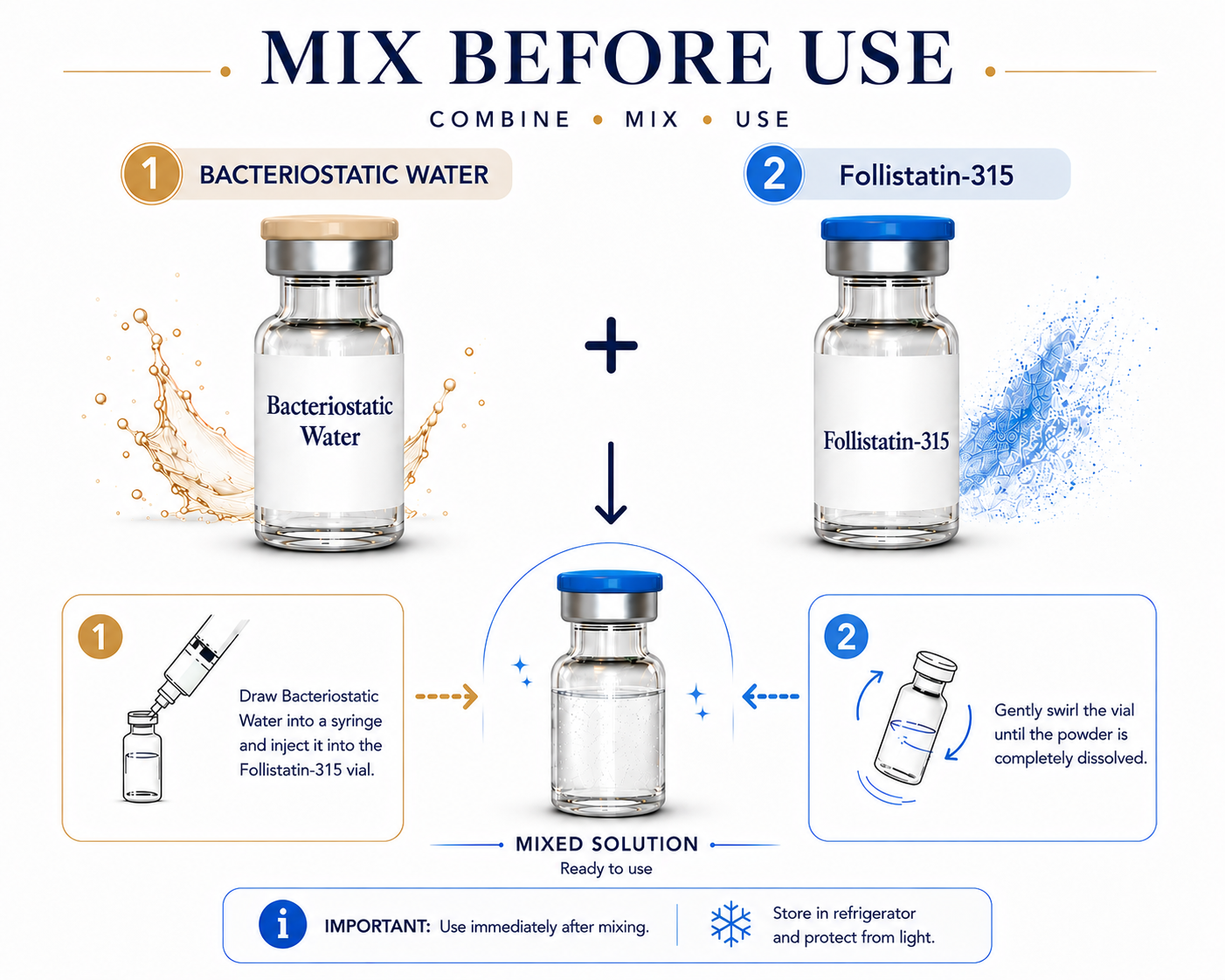
Follistatin-315 and BAC Water Mix

Follistatin-315 Reconstitution Calculator

Enter the amount you want to measure. The vial buttons will highlight which vial strengths create cleaner syringe-unit measurements.

What amount do you need?

Type the target amount, then choose mg or mcg. Example: 2mg or 500mcg.

Syringe size:
Possible vial strengths:
Best Match Good Match Usable Harder to Measure

Example Follistatin-315 Titration Schedule

Protocol ItemGuidance
Dose100–300 mcg per dose
Cycling8 weeks on, 4–8 weeks off
Administration NoteSome references theorize that localized administration (e.g., near the target muscle) may be a best approach.
Possible vial strengths:

What Is It?

Follistatin-315

Myostatin-binding follistatin isoform.

Bacteriostatic Water

Sterile water containing a bacteriostatic preservative, commonly used when preparing multi-use research vials.

How To Mix Follistatin-315

1
Clean

Use alcohol swabs to clean the tops of both vials.

2
Draw BAC Water

Draw the selected amount of bacteriostatic water.

3
Inject Slowly

Add the liquid slowly down the side of the vial.

4
Swirl Gently

Do not shake. Swirl gently until dissolved.

5
Store Properly

Store as directed and protect from heat and light.

Best Practices & Common Mistakes

Best Practices

  • Use sterile technique.
  • Protect from light and heat.
  • Store refrigerated when appropriate.
  • Use clean syringe-unit math before measuring.

Common Mistakes

  • Confusing milligrams with milliliters.
  • Choosing an option with awkward decimal units.
  • Using too little liquid for very small measurements.
  • Shaking the vial aggressively.

Follistatin-315 Storage & Handling

Lyophilized Powder: −20°C (−4°F) for long-term storage (up to 24 months). Refrigeration 2–8°C (36–46°F) for short-term use (up to ~3 months). Original sealed vial in the freezer is safest.
Reconstituted Solution: 2–8°C (36–46°F), use within ~7–14 days. Keep sealed, avoid light, and do not repeat freeze-thaw cycles.

Frequently Asked Questions

Follistatin-315 (FS-315) is one of the natural isoforms of follistatin, a protein that binds and neutralizes myostatin — the body's main "brake" on muscle growth — as well as activin. FS-315 specifically is the freely circulating, systemic form: it has only weak binding to cell surfaces, so it travels through the bloodstream rather than staying anchored in local tissue. By mopping up myostatin and activin in circulation, it's studied as a way to release the natural limit on muscle growth.
In research and anecdotal protocols, follistatin is referenced in micrograms — commonly around 100 mcg per day by subcutaneous injection, often run in short blocks of a few weeks. Because the protein clears from the blood within hours, daily dosing is typical. These are research-reference figures, not an approved regimen, and the right dose, length, and whether it's appropriate at all are clinical decisions.
Add bacteriostatic water to the dry vial slowly and swirl gently — never shake, as proteins are fragile. For example, a 1 mg vial + 1 mL of water gives 1 mg/mL (1,000 mcg/mL); a 100 mcg dose is then 0.1 mL, which is 10 units on a U-100 insulin syringe. Use the calculator above to match your actual vial size (1 mg is common) and target dose. Doses are in micrograms, so draw carefully.
They're closely related: Follistatin-344 is the longer precursor protein, and the body processes it into the mature circulating forms — Follistatin-315 being the main one. So FS-315 is essentially the systemic, free-floating version that FS-344 becomes, with weak cell-surface binding and broad circulation. Practically, research that wants systemic, whole-body myostatin and activin neutralization leans toward the circulating FS-315 profile, whereas FS-344 is the commonly sold "starting" form; the third isoform, FS-288, is the opposite extreme — it sticks to cell surfaces and acts locally.
Here the reputation runs far ahead of the evidence: the famous "double-muscled" results — myostatin-knockout cattle and mice with 50–115% more muscle — come from genetic modification and gene therapy, not from injecting follistatin protein, and there are essentially no human studies showing the injected peptide reproduces them. Because follistatin also blocks activin (a regulator of FSH), there are theoretical effects on reproductive hormones, and strong myostatin inhibition raises questions about tendon and cardiac tissue. It is not FDA-approved, is sold for research only, and is banned by WADA as a myostatin inhibitor. Store the dry vial refrigerated and out of light; once reconstituted, keep it cold and use within a few weeks.
Practical takeaway: If your real goal is weight or metabolic health, the most useful next step is discussing approved treatment options with a clinician rather than relying on an unapproved compound.
Important: This tool is for informational and research-reference purposes only. Not intended for human or veterinary use.
← All peptides