
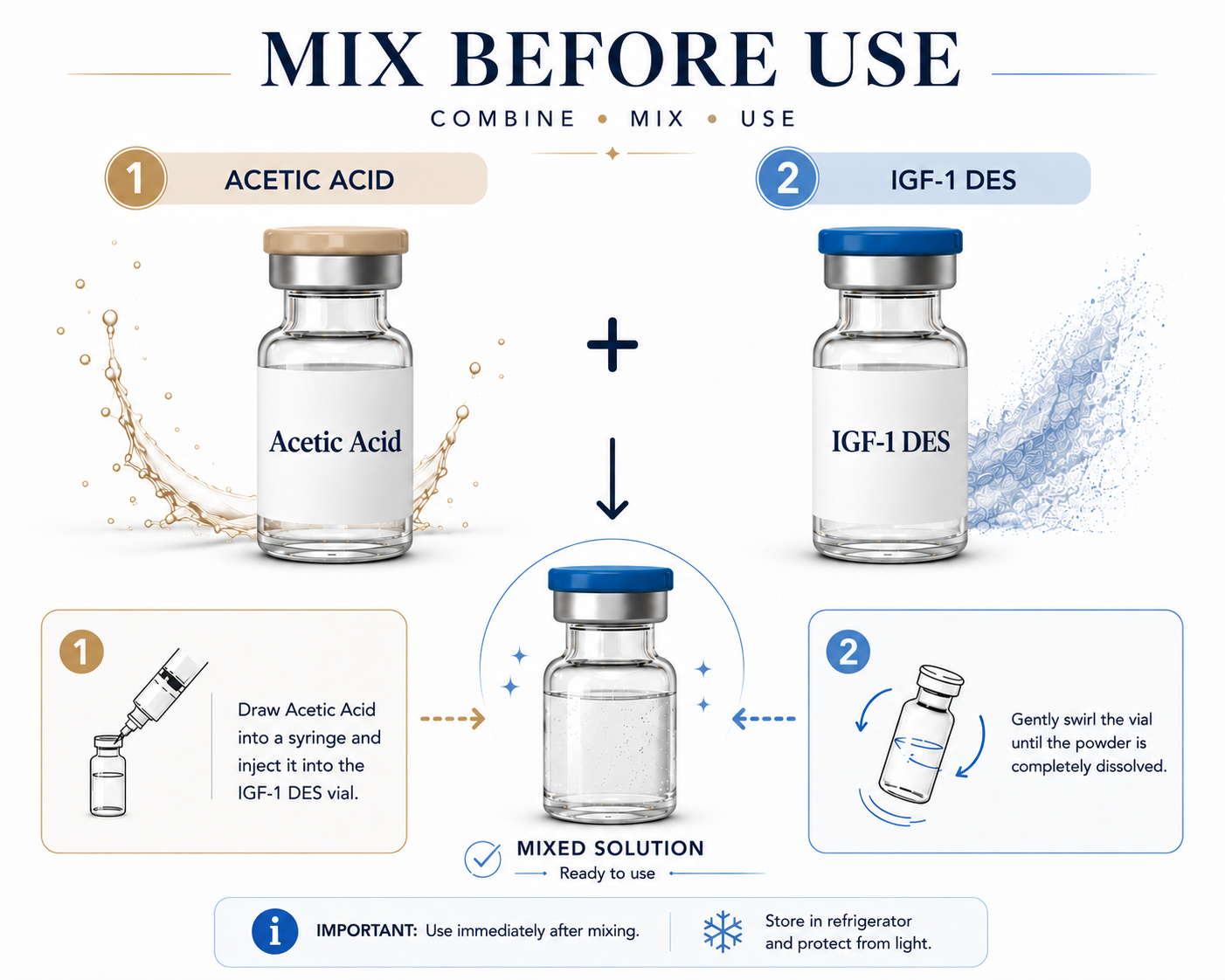
IGF-1 DES and Acetic Acid Mix

IGF-1 DES Reconstitution Calculator

Enter the amount you want to measure. The vial buttons will highlight which vial strengths create cleaner syringe-unit measurements.

⚠ Use acetic acid — not bacteriostatic water IGF-1 DES is insoluble or unstable in standard BAC water. Manufacturer protocols require reconstitution in dilute acetic acid (0.1%) — or, for IGF-1 variants, 50 mM acetic acid. Volumes shown below refer to acetic acid, not water.

What amount do you need?

Type the target amount, then choose mg or mcg. Example: 2mg or 500mcg.

Syringe size:
Possible vial strengths:
Best Match Good Match Usable Harder to Measure

Example IGF-1 DES Titration Schedule

ParameterDetails
Typical Dosage30–100 mcg per injection (common start: 50 mcg)
RouteIntramuscular (IM) – into targeted muscle group
Timing10–15 minutes pre‑workout
FrequencyOnce daily, on training days only
Cycle Length4–6 weeks on, then 4–6 weeks off
Reconstitution0.6% acetic acid (preferred) or bacteriostatic water
Storage (lyophilized)−20°C or below
Storage (reconstituted)4°C, use within 2–7 days; aliquot for freezing
Half‑life~30 minutes (short, localized action)
Possible vial strengths:

What Is It?

IGF-1 DES

Truncated IGF-1 (DES 1-3) variant.

Acetic Acid (0.1%)

A dilute solution of acetic acid (typically 0.1% for most peptides, or 50 mM for IGF-1 variants) used to reconstitute peptides that are insoluble or unstable in standard bacteriostatic water. IGF-1 DES requires an acidic carrier to dissolve fully and remain stable — plain BAC water will not work and may damage the peptide.

How To Mix IGF-1 DES

1
Clean

Use alcohol swabs to clean the tops of both vials.

2
Draw Acetic Acid

Draw the selected amount of 0.1% acetic acid.

3
Inject Slowly

Add the liquid slowly down the side of the vial.

4
Swirl Gently

Do not shake. Swirl gently until dissolved.

5
Store Properly

Store as directed and protect from heat and light.

Best Practices & Common Mistakes

Best Practices

  • Use sterile technique.
  • Protect from light and heat.
  • Store refrigerated when appropriate.
  • Use clean syringe-unit math before measuring.

Common Mistakes

  • Confusing milligrams with milliliters.
  • Choosing an option with awkward decimal units.
  • Using too little liquid for very small measurements.
  • Shaking the vial aggressively.

IGF-1 DES Storage & Handling

Lyophilized Powder: −20°C (−4°F) for long-term storage (up to 24 months). Refrigeration 2–8°C (36–46°F) for short-term use (up to ~3 months). Original sealed vial in the freezer is safest.
Reconstituted Solution: 2–8°C (36–46°F), use within ~7–14 days. Keep sealed, avoid light, and do not repeat freeze-thaw cycles.

Frequently Asked Questions

IGF-1 DES usually refers to des(1-3)IGF-I, a shortened IGF-1 analog missing the first three amino acids at the N-terminus. That small structural deletion is the reason it is discussed separately from regular IGF-1 and IGF-1 LR3.
IGF-1 DES and IGF-1 LR3 are not two names for the same compound. DES is a truncated IGF-1 analog, while LR3 is a longer modified analog with an added N-terminal extension and an arginine substitution.
The phrase “IGF-1 DES half life 20–30 minutes” reflects a common search intent around short activity windows. A calculator can help with concentration and volume math, but it should not convert half-life searches into timing, injection, or protocol advice.
For calculator math, 1 mg equals 1,000 mcg. If a 1 mg vial is brought to 4 mL total volume, the concentration is 250 mcg/mL; on a U-100 syringe, 0.10 mL equals 10 units and contains 25 mcg. This is concentration math only, not a suggested amount.
IGF-1 DES discussions should start with IGF-pathway biology, including glucose-related effects, growth-factor signaling, and injection-site concerns in research contexts. “Before and after” or bodybuilding claims do not replace controlled safety data.
Practical takeaway: If your real goal is weight or metabolic health, the most useful next step is discussing approved treatment options with a clinician rather than relying on an unapproved compound.
Important: This tool is for informational and research-reference purposes only. Not intended for human or veterinary use.
← All peptides