
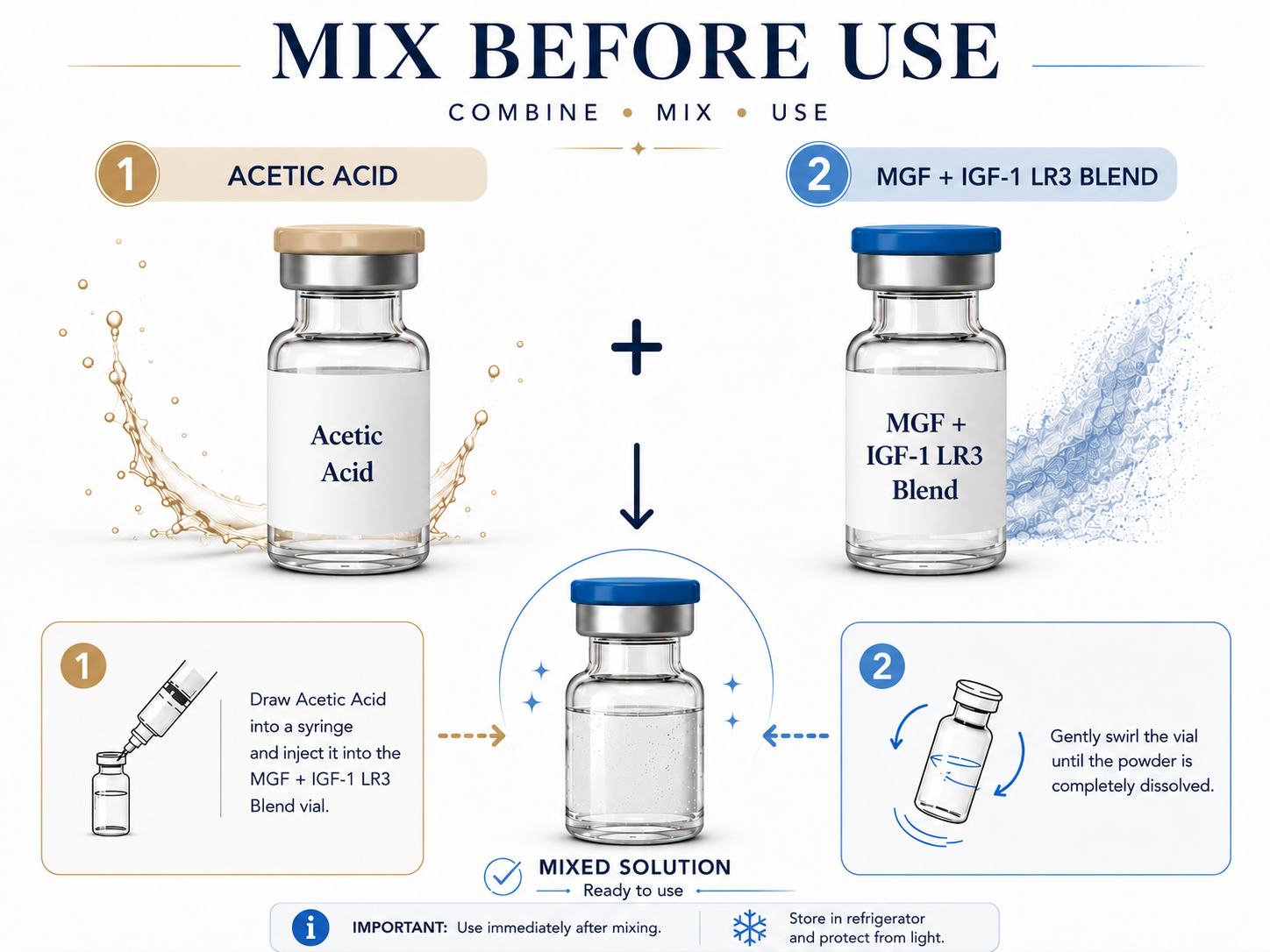
MGF + IGF-1 LR3 Blend and Acetic Acid Mix

MGF + IGF-1 LR3 Blend Reconstitution Calculator

Enter the amount you want to measure. The vial buttons will highlight which vial strengths create cleaner syringe-unit measurements.

⚠ Use acetic acid — not bacteriostatic water MGF + IGF-1 LR3 Blend is insoluble or unstable in standard BAC water. Manufacturer protocols require reconstitution in dilute acetic acid (0.1%) — or, for IGF-1 variants, 50 mM acetic acid. Volumes shown below refer to acetic acid, not water.

What amount do you need?

Type the target amount, then choose mg or mcg. Example: 2mg or 500mcg.

Syringe size:
Possible vial strengths:
Best Match Good Match Usable Harder to Measure

Example MGF + IGF-1 LR3 Blend Titration Schedule

ParameterDetails
Dosage (MGF)100–200 mcg
Dosage (IGF‑1 LR3)40–80 mcg
RouteIntramuscular (IM)
FrequencyOn training days only
TimingMGF: immediately post‑workout; IGF‑1 LR3: 30–60 min after MGF
Cycle Length4–6 weeks on, then 4–8 weeks off
Half‑life (MGF)Minutes
Half‑life (IGF‑1 LR3)~20–30 hours
Reconstitution0.6% acetic acid or bacteriostatic water
Possible vial strengths:

What Is It?

MGF + IGF-1 LR3 Blend

Research blend of MGF and IGF-1 LR3.

Acetic Acid (0.1%)

A dilute solution of acetic acid (typically 0.1% for most peptides, or 50 mM for IGF-1 variants) used to reconstitute peptides that are insoluble or unstable in standard bacteriostatic water. MGF + IGF-1 LR3 Blend requires an acidic carrier to dissolve fully and remain stable — plain BAC water will not work and may damage the peptide.

How To Mix MGF + IGF-1 LR3 Blend

1
Clean

Use alcohol swabs to clean the tops of both vials.

2
Draw Acetic Acid

Draw the selected amount of 0.1% acetic acid.

3
Inject Slowly

Add the liquid slowly down the side of the vial.

4
Swirl Gently

Do not shake. Swirl gently until dissolved.

5
Store Properly

Store as directed and protect from heat and light.

Best Practices & Common Mistakes

Best Practices

  • Use sterile technique.
  • Protect from light and heat.
  • Store refrigerated when appropriate.
  • Use clean syringe-unit math before measuring.

Common Mistakes

  • Confusing milligrams with milliliters.
  • Choosing an option with awkward decimal units.
  • Using too little liquid for very small measurements.
  • Shaking the vial aggressively.

MGF + IGF-1 LR3 Blend Storage & Handling

Lyophilized Powder: −20°C (−4°F) for long-term storage (up to 24 months). Refrigeration 2–8°C (36–46°F) for short-term use (up to ~3 months). Original sealed vial in the freezer is safest.
Reconstituted Solution: 2–8°C (36–46°F), use within ~7–14 days. Keep sealed, avoid light, and do not repeat freeze-thaw cycles.

Frequently Asked Questions

The calculator needs the amount of MGF, the amount of IGF-1 LR3, and the final liquid volume. If the vial only shows a total blend amount without separate ingredient amounts, the calculator can show total concentration but cannot confirm the concentration of each compound.
For a true blend, both views can matter. Total concentration is calculated from the full vial amount, but separate MGF and IGF-1 LR3 concentrations require each compound’s individual mass on the label or batch document.
No. A reconstitution calculator can explain how much material is present per mL after liquid is added, but it should not provide dosing, timing, cycle length, or personal-use advice. For this blend, the safe output is concentration math only.
“Cycle” implies a use schedule, while a calculator only handles vial math. The useful calculator question is how the selected liquid volume changes mg/mL or mcg/mL concentration, not how the blend should be used.
The formula stays the same: compound amount divided by final volume. What changes is the identity of each growth-factor-related compound, so the blend should not be treated as one interchangeable ingredient unless the label only supports total-concentration math.
Practical takeaway: If your real goal is weight or metabolic health, the most useful next step is discussing approved treatment options with a clinician rather than relying on an unapproved compound.
Important: This tool is for informational and research-reference purposes only. Not intended for human or veterinary use.
← All peptides