NAD+ and BAC Water Mix

NAD+ Reconstitution Calculator

Enter the amount you want to measure. The vial buttons will highlight which vial strengths create cleaner syringe-unit measurements.

What amount do you need?

Type the target amount, then choose mg or mcg. Example: 2mg or 500mcg.

Syringe size:
Possible vial strengths:
Best Match Good Match Usable Harder to Measure

Example NAD+ Titration Schedule

Protocol ItemGuidance
Typical Dose Range50–250 mg per dose
More Intensive Therapy500–1500 mg per day, often as part of a multi-day protocol
Cycling
Possible vial strengths:

What Is It?

NAD+

Nicotinamide adenine dinucleotide research solution.

Bacteriostatic Water

Sterile water containing a bacteriostatic preservative, commonly used when preparing multi-use research vials.

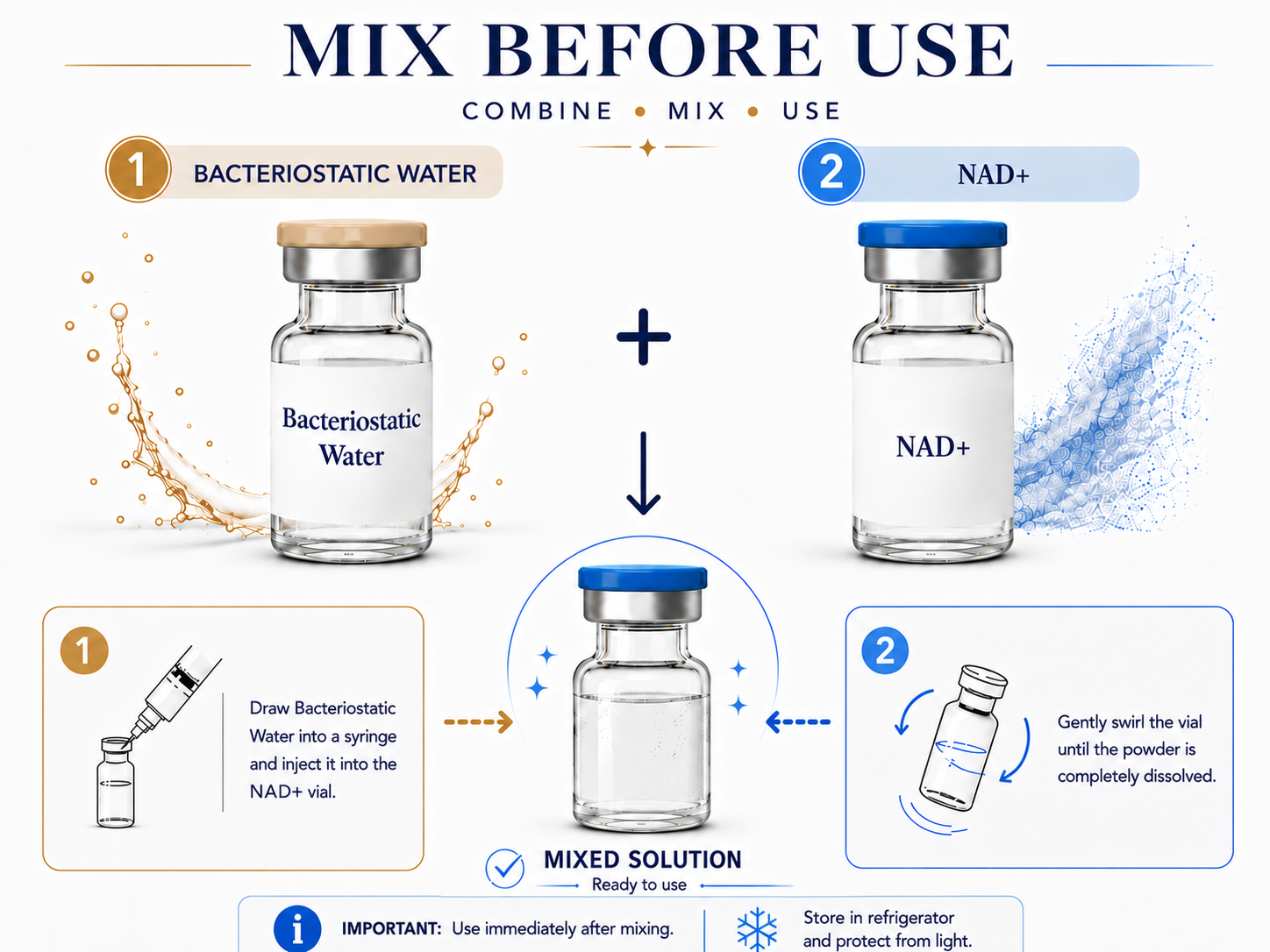
How To Mix NAD+

1
Clean

Use alcohol swabs to clean the tops of both vials.

2
Draw BAC Water

Draw the selected amount of bacteriostatic water.

3
Inject Slowly

Add the liquid slowly down the side of the vial.

4
Swirl Gently

Do not shake. Swirl gently until dissolved.

5
Store Properly

Store as directed and protect from heat and light.

Best Practices & Common Mistakes

Best Practices

  • Use sterile technique.
  • Protect from light and heat.
  • Store refrigerated when appropriate.
  • Use clean syringe-unit math before measuring.

Common Mistakes

  • Confusing milligrams with milliliters.
  • Choosing an option with awkward decimal units.
  • Using too little liquid for very small measurements.
  • Shaking the vial aggressively.

NAD+ Storage & Handling

Lyophilized Powder: −20°C (−4°F) for long-term storage (up to 24 months). Refrigeration 2–8°C (36–46°F) for short-term use (up to ~3 months). Original sealed vial in the freezer is safest.
Reconstituted Solution: 2–8°C (36–46°F), use within ~7–14 days. Keep sealed, avoid light, and do not repeat freeze-thaw cycles.

Frequently Asked Questions

No — despite showing up on peptide sites, NAD+ (nicotinamide adenine dinucleotide) isn't a peptide at all; it's a coenzyme built from two nucleotides that every cell uses to shuttle electrons in energy metabolism. It exists in two forms, NAD+ and NADH, that constantly convert back and forth as your cells make energy. So it belongs to a completely different chemical family than the amino-acid-chain peptides it often gets grouped with online.
NAD+ is the oxidized form and NADH is the reduced form: when NAD+ picks up electrons (and a hydrogen) during reactions like breaking down glucose, it becomes NADH, and it's re-oxidized back to NAD+ when it hands those electrons off in the mitochondria. NADP+/NADPH are a closely related pair carrying an extra phosphate group, used mainly for building molecules and antioxidant defense rather than energy extraction. Converting NADPH toward NADP+ is an oxidation, since oxidation means losing electrons.
Swallowing NAD+ itself is inefficient because it's largely broken down before it reaches your cells intact, which is why most supplements use precursors your body converts into NAD+ — chiefly nicotinamide riboside (NR) and nicotinamide mononucleotide (NMN). Human studies show these precursors reliably raise blood NAD+ levels and are generally well tolerated; NR has recognized dietary-supplement status, while NMN's status has been legally contested in the US. What's far less settled is whether higher NAD+ translates into the anti-aging or energy benefits often advertised.
Your own habits move NAD+ meaningfully: regular exercise is one of the most consistent ways to raise it, and it reliably outperforms supplements in the research. Periods of fasting or calorie restriction, good sleep, and getting enough B3-family nutrients (niacin, and foods like fish, poultry, and whole grains) all support the pathways your body uses to make and recycle NAD+. These approaches carry none of the sterility or dosing risks of injecting anything.
Oral NAD+ precursors have a reassuring short-term safety record, but IV and injectable NAD+ are a different situation. IV NAD+ is widely sold in wellness clinics, yet human evidence for its anti-aging and energy claims is limited, and rapid infusions commonly cause chest tightness, nausea, or flushing, which is why they're run slowly under supervision; there are no FDA-approved protocols for NAD+ injection. Self-injecting "research" NAD+ adds the usual risks of an unregulated product — uncertain purity, dose, and sterility — so this is a conversation for a licensed clinician, not a DIY protocol.
Practical takeaway: If your real goal is weight or metabolic health, the most useful next step is discussing approved treatment options with a clinician rather than relying on an unapproved compound.
Important: This tool is for informational and research-reference purposes only. Not intended for human or veterinary use.
← All peptides