
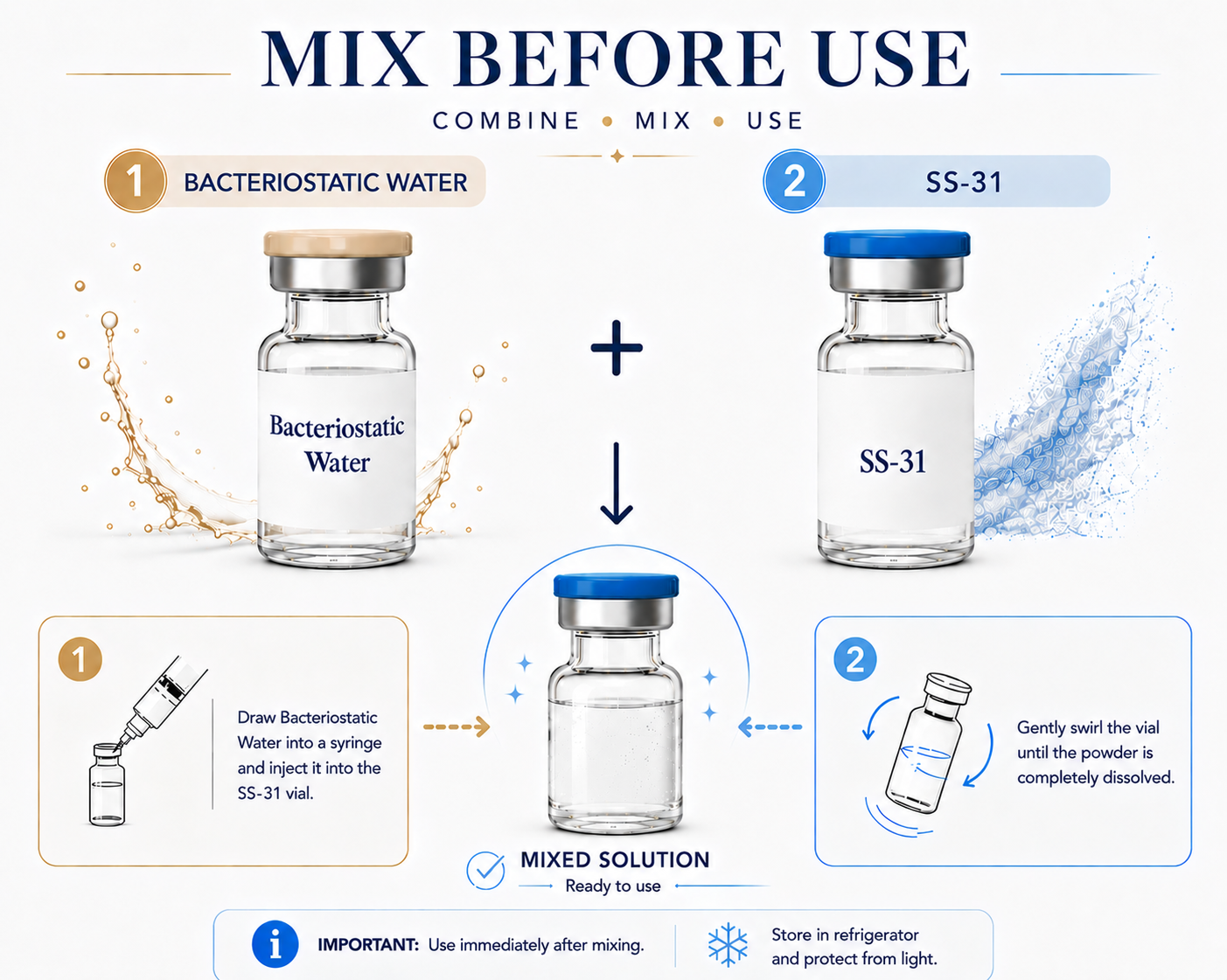
SS-31 and BAC Water Mix

SS-31 Reconstitution Calculator

Enter the amount you want to measure. The vial buttons will highlight which vial strengths create cleaner syringe-unit measurements.

What amount do you need?

Type the target amount, then choose mg or mcg. Example: 2mg or 500mcg.

Syringe size:
Possible vial strengths:
Best Match Good Match Usable Harder to Measure

Example SS-31 Titration Schedule

Protocol ItemGuidance
Dose2–5 mg per dose
FrequencyDaily
Cycle10–30 days on, then a minimum 30-day cycle break between cycles
Possible vial strengths:

What Is It?

SS-31

Mitochondria-targeted antioxidant tetrapeptide.

Bacteriostatic Water

Sterile water containing a bacteriostatic preservative, commonly used when preparing multi-use research vials.

How To Mix SS-31

1
Clean

Use alcohol swabs to clean the tops of both vials.

2
Draw BAC Water

Draw the selected amount of bacteriostatic water.

3
Inject Slowly

Add the liquid slowly down the side of the vial.

4
Swirl Gently

Do not shake. Swirl gently until dissolved.

5
Store Properly

Store as directed and protect from heat and light.

Best Practices & Common Mistakes

Best Practices

  • Use sterile technique.
  • Protect from light and heat.
  • Store refrigerated when appropriate.
  • Use clean syringe-unit math before measuring.

Common Mistakes

  • Confusing milligrams with milliliters.
  • Choosing an option with awkward decimal units.
  • Using too little liquid for very small measurements.
  • Shaking the vial aggressively.

SS-31 Storage & Handling

Lyophilized Powder: −20°C (−4°F) for long-term storage (up to 24 months). Refrigeration 2–8°C (36–46°F) for short-term use (up to ~3 months). Original sealed vial in the freezer is safest.
Reconstituted Solution: 2–8°C (36–46°F), use within ~7–14 days. Keep sealed, avoid light, and do not repeat freeze-thaw cycles.

Frequently Asked Questions

SS-31, also called elamipretide, is a synthetic four-amino-acid peptide from the Szeto-Schiller family that homes in on the inner mitochondrial membrane and binds cardiolipin, a lipid essential to how mitochondria generate energy. That mechanism makes it a "mitochondrial protector," and it's mechanistically distinct from MOTS-c, which is a naturally mitochondria-encoded peptide acting through the AMPK energy pathway. It's also unrelated to similarly abbreviated compounds like Cartalax, despite occasional online confusion.
Partly, and the distinction matters. In September 2025 the FDA granted accelerated approval to elamipretide (brand name Forzinity) as the first mitochondria-targeted therapy — but only to improve muscle strength in people with Barth syndrome, an ultra-rare genetic disorder, as a prescription medicine given under specialist care. It is not approved for energy, anti-aging, weight loss, or bodybuilding, and the "research use only" SS-31 sold online is not the approved drug and hasn't been through that regulatory process.
By binding cardiolipin, SS-31 helps stabilize the structure of the inner mitochondrial membrane, which supports the electron transport chain that produces cellular energy and reduces damaging oxidative byproducts. In Barth syndrome, where cardiolipin remodeling is genetically broken, that targeted action is the basis for its approved use. Extending those cell-level effects into promises of more energy or slowed aging in otherwise healthy people is not something current human evidence establishes.
They're often discussed together because both target mitochondria, but they're different molecules with different mechanisms and separate evidence bases, and there's no established protocol for combining them. Stacking two peptides — one only narrowly approved and one not approved at all — multiplies the unknowns rather than the benefits, since interactions, dosing, and long-term effects haven't been studied in that combination. Questions about combining them are best directed to a clinician, not a forum.
In the clinical trials behind its approval, elamipretide was given under medical supervision with monitoring, most commonly with injection-site reactions among the reported effects; that controlled setting is very different from self-injecting online-sourced powder. "Research use only" products aren't manufactured or verified to human-injectable standards for purity, dose, or sterility, so contamination and inaccurate potency are real hazards on top of the compound's own unknowns for off-label use. If you have a diagnosed mitochondrial condition, this is a prescription conversation with a specialist, not a DIY one.
Practical takeaway: If your real goal is weight or metabolic health, the most useful next step is discussing approved treatment options with a clinician rather than relying on an unapproved compound.
Important: This tool is for informational and research-reference purposes only. Not intended for human or veterinary use.
← All peptides