
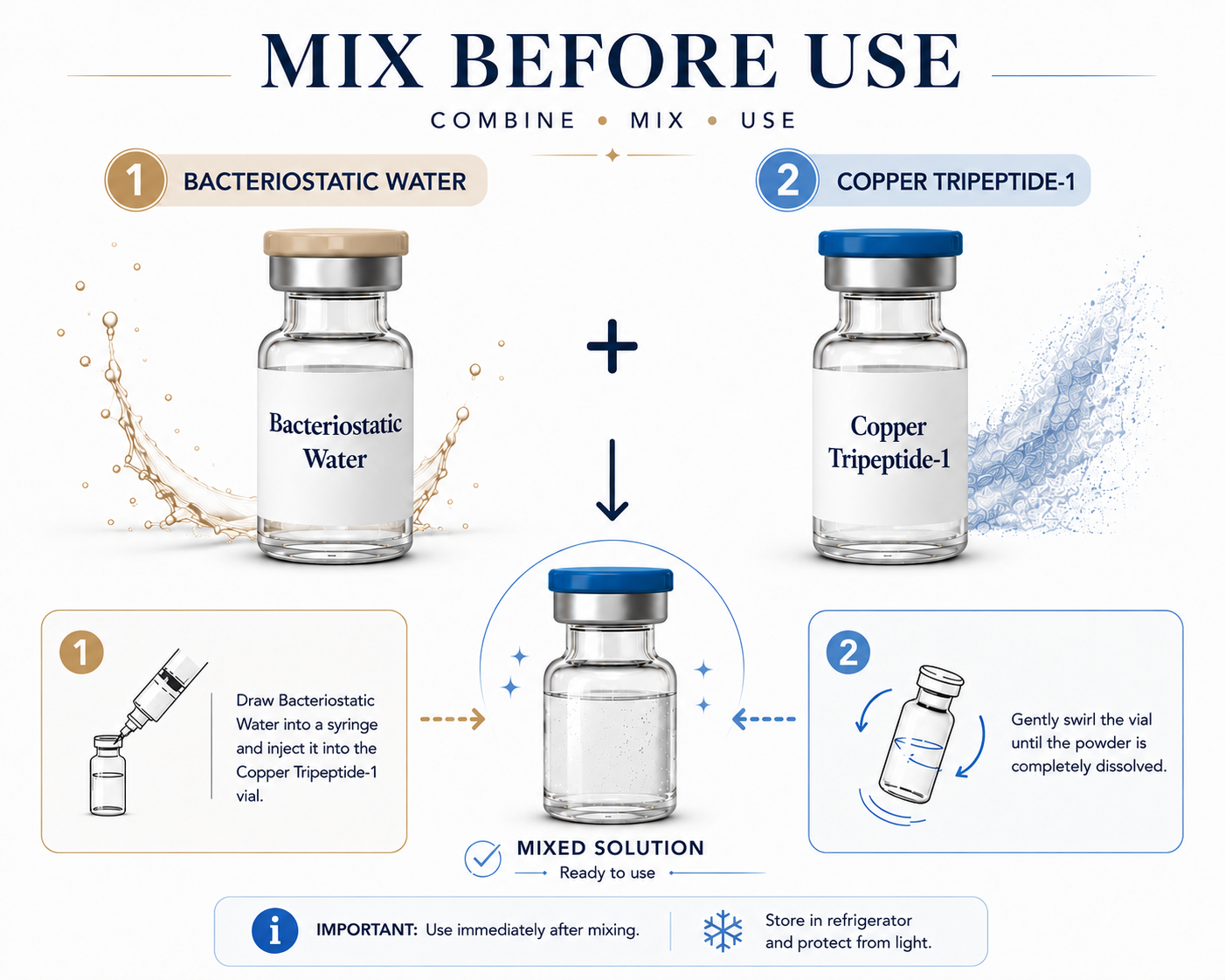
Copper Tripeptide-1 and BAC Water Mix

Copper Tripeptide-1 Reconstitution Calculator

Enter the amount you want to measure. The vial buttons will highlight which vial strengths create cleaner syringe-unit measurements.

What amount do you need?

Type the target amount, then choose mg or mcg. Example: 2mg or 500mcg.

Syringe size:
Possible vial strengths:
Best Match Good Match Usable Harder to Measure

Example Copper Tripeptide-1 Titration Schedule

ParameterDetails
Dosage1–3 mg per day (typically 1–2 mg)
RouteSubcutaneous (SC)
FrequencyDaily or every other day
Cycle Length4–8 weeks, followed by 4 weeks off
Half‑life0.5–1 hour
ReconstitutionUse bacteriostatic water (preferred for multi-use) or sterile water; final concentration 1–10 mg/mL
Possible vial strengths:

What Is It?

Copper Tripeptide-1

GHK-Cu cosmetic copper peptide.

Bacteriostatic Water

Sterile water containing a bacteriostatic preservative, commonly used when preparing multi-use research vials.

How To Mix Copper Tripeptide-1

1
Clean

Use alcohol swabs to clean the tops of both vials.

2
Draw BAC Water

Draw the selected amount of bacteriostatic water.

3
Inject Slowly

Add the liquid slowly down the side of the vial.

4
Swirl Gently

Do not shake. Swirl gently until dissolved.

5
Store Properly

Store as directed and protect from heat and light.

Best Practices & Common Mistakes

Best Practices

  • Use sterile technique.
  • Protect from light and heat.
  • Store refrigerated when appropriate.
  • Use clean syringe-unit math before measuring.

Common Mistakes

  • Confusing milligrams with milliliters.
  • Choosing an option with awkward decimal units.
  • Using too little liquid for very small measurements.
  • Shaking the vial aggressively.

Copper Tripeptide-1 Storage & Handling

Lyophilized Powder: −20°C (−4°F) for long-term storage (up to 24 months). Refrigeration 2–8°C (36–46°F) for short-term use (up to ~3 months). Original sealed vial in the freezer is safest.
Reconstituted Solution: 2–8°C (36–46°F), use within ~7–14 days. Keep sealed, avoid light, and do not repeat freeze-thaw cycles.

Frequently Asked Questions

Usually no. A finished Copper Tripeptide-1 serum already has its own formula, solvent system, and concentration, so a reconstitution calculator is only useful when you have a measured powder or vial amount plus a chosen final volume.
It calculates concentration math, such as mg/mL or mcg/mL, from the labeled amount of Copper Tripeptide-1 and the final liquid volume. It does not determine skincare use, hair-use amounts, injection practices, or medical dosing.
The calculator needs the actual measured amount, purity, and form listed for the material. Names like Copper Tripeptide 1, Copper Tripeptide-1, and GHK-Cu may appear close in search results, but the calculation should follow the specific label or COA.
No. Whether the keyword is about hair or skin, the calculator still only converts compound amount and liquid volume into concentration. Hair-growth claims or personal-use directions should be kept separate from calculator content.
It can matter if the supplier lists a different salt, complex, purity, or active amount. For calculator math, use the exact mass and identity on the product documentation instead of assuming every Copper Tripeptide-1 or GHK-Cu listing is interchangeable.
Practical takeaway: If your real goal is weight or metabolic health, the most useful next step is discussing approved treatment options with a clinician rather than relying on an unapproved compound.
Important: This tool is for informational and research-reference purposes only. Not intended for human or veterinary use.
← All peptides