Glutathione and BAC Water Mix

Glutathione Reconstitution Calculator

Enter the amount you want to measure. The vial buttons will highlight which vial strengths create cleaner syringe-unit measurements.

What amount do you need?

Type the target amount, then choose mg or mcg. Example: 2mg or 500mcg.

Syringe size:
Possible vial strengths:
Best Match Good Match Usable Harder to Measure

Example Glutathione Titration Schedule

Protocol ItemGuidance
Dose (per administration)100–600 mg per dose
Frequency guidanceTypically, smaller doses are used for more frequent dosing, while larger doses are used for less frequent dosing.
Cycling1–3× per week for ~1 month; can be extended up to 3–4 months, with a 1-month minimum cycle break between.
AdjustmentsCycle length and intensity depend on response and goal.
Possible vial strengths:

What Is It?

Glutathione

Tripeptide antioxidant used in cosmetic research.

Bacteriostatic Water

Sterile water containing a bacteriostatic preservative, commonly used when preparing multi-use research vials.

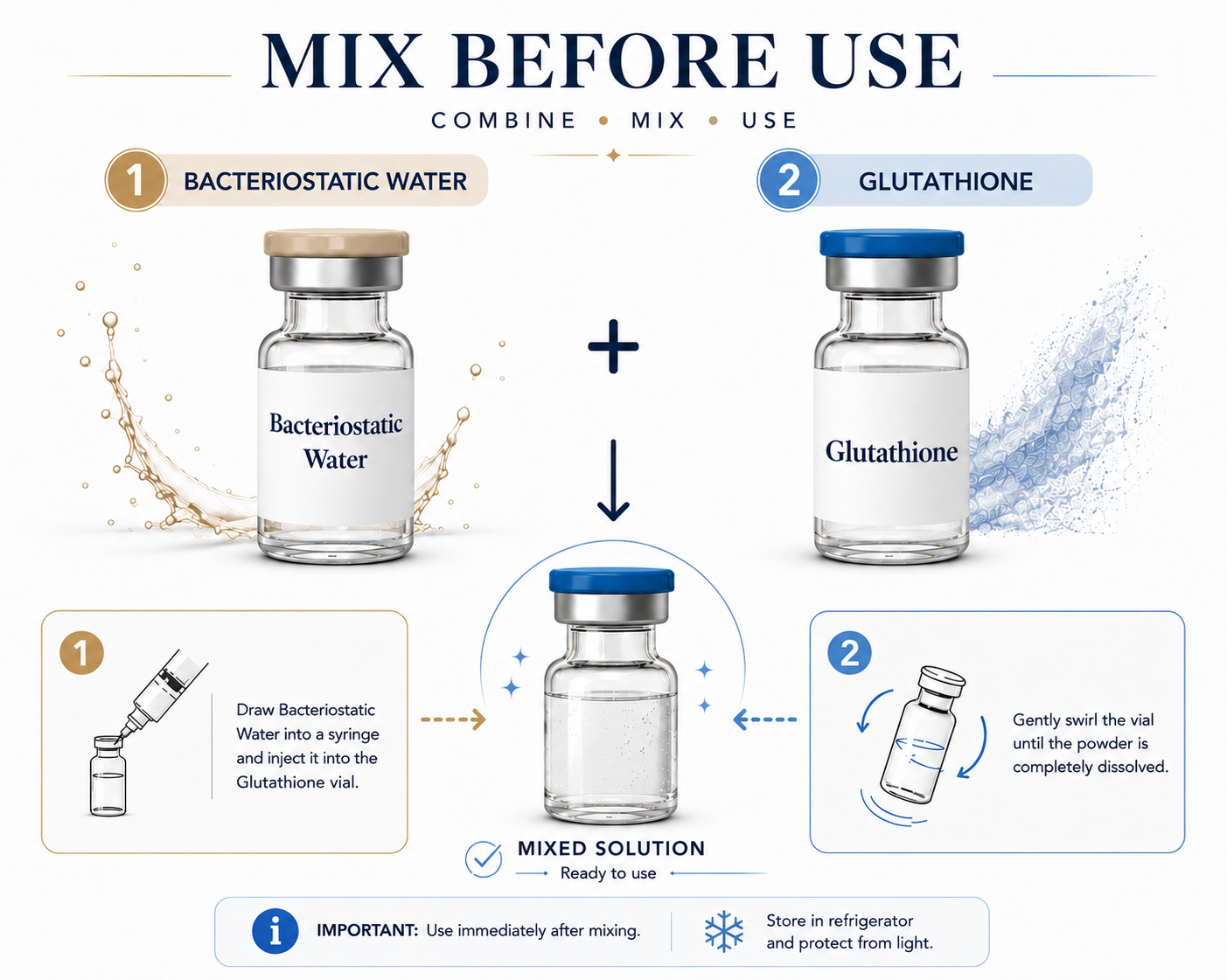
How To Mix Glutathione

1
Clean

Use alcohol swabs to clean the tops of both vials.

2
Draw BAC Water

Draw the selected amount of bacteriostatic water.

3
Inject Slowly

Add the liquid slowly down the side of the vial.

4
Swirl Gently

Do not shake. Swirl gently until dissolved.

5
Store Properly

Store as directed and protect from heat and light.

Best Practices & Common Mistakes

Best Practices

  • Use sterile technique.
  • Protect from light and heat.
  • Store refrigerated when appropriate.
  • Use clean syringe-unit math before measuring.

Common Mistakes

  • Confusing milligrams with milliliters.
  • Choosing an option with awkward decimal units.
  • Using too little liquid for very small measurements.
  • Shaking the vial aggressively.

Glutathione Storage & Handling

Lyophilized Powder: −20°C (−4°F) for long-term storage (up to 24 months). Refrigeration 2–8°C (36–46°F) for short-term use (up to ~3 months). Original sealed vial in the freezer is safest.
Reconstituted Solution: 2–8°C (36–46°F), use within ~7–14 days. Keep sealed, avoid light, and do not repeat freeze-thaw cycles.

Frequently Asked Questions

Yes — unlike many supplements labeled "peptide" for marketing, glutathione genuinely is one: a tripeptide built from glutamate, cysteine, and glycine. It's the body's main intracellular antioxidant, made naturally in every cell, where it neutralizes free radicals and helps recycle other antioxidants like vitamins C and E. It's not a lab-only research chemical; your liver produces it constantly.
Plain oral glutathione is largely broken down by digestion, so absorption into the bloodstream is limited — which is why liposomal versions (wrapping it in fat bubbles to survive the gut) and precursor supplements like NAC are marketed as workarounds. Evidence that any oral form meaningfully raises the body's glutathione stores is mixed but improving, with some trials showing modest increases over weeks. None of this requires injecting anything.
To a degree, yes. Sulfur-rich foods (garlic, onions, cruciferous vegetables like broccoli and Brussels sprouts), whey protein, and foods supplying its building blocks support your body's own production, and precursors like NAC and adequate protein matter more than eating "glutathione" directly. Notably, things also deplete it: heavy acetaminophen (Tylenol) use consumes glutathione, which is exactly why NAC is the hospital antidote for acetaminophen overdose.
Oral glutathione is generally well tolerated, with occasional mild effects like bloating or cramping, but it isn't right for everyone. People who are pregnant or breastfeeding lack good safety data and should check with a clinician first, and anyone with asthma should be aware of theoretical airway sensitivity reported with inhaled forms. As with any supplement, tell your doctor if you take regular medications, since your own needs and interactions are individual.
This is the part to be careful with. No regulator has approved injectable glutathione for skin lightening, and health authorities including the US FDA and the Philippine FDA have warned of serious harms — liver and kidney toxicity, severe allergic reactions, Stevens-Johnson syndrome, and, when supplement-grade powder is mixed for injection or done in non-sterile conditions, dangerous contamination and infection risk. If skin tone or antioxidant support is your goal, discuss oral or topical options and a proper diagnosis with a licensed clinician rather than self-injecting.
Practical takeaway: If your real goal is weight or metabolic health, the most useful next step is discussing approved treatment options with a clinician rather than relying on an unapproved compound.
Important: This tool is for informational and research-reference purposes only. Not intended for human or veterinary use.
← All peptides